

Technical SEO & Service Discovery System
A technical SEO and internal discovery foundation connecting service pages, relevant projects, articles, metadata, and machine-readable site information.
Project overview
What this project is
The work focuses on sound technical foundations rather than ranking guarantees. Search visibility still depends on content quality, competition, crawl behavior, backlinks, and time; this system is designed to make the website easier to understand and maintain.
The Challenge
Content Discovery ArchitectureAs services, projects, and articles grow, isolated pages can become difficult for visitors and crawlers to discover, interpret, and connect.
Project Goals
My role
What I handled
Information architecture, metadata engineering, content relationships, and technical SEO safeguards.
Key features
Core functionality
Page-specific metadata
Titles, descriptions, canonical URLs, and social previews are generated for relevant public routes.
Structured relationships
Service pages can reference related projects while articles connect to relevant services and pillar content.
Machine-readable context
Sitemaps, JSON-LD, robots controls, and llms.txt expose appropriate public information.
Editorial safeguards
Descriptions use controlled lengths and avoid guarantees or fabricated search results.
Pages / modules
What is included
Metadata Helpers
Produces page-specific titles, descriptions, and social preview information.
Canonical URL System
Assigns one preferred public identity to relevant pages and dynamic routes.
XML Sitemap
Lists eligible public services, projects, articles, and core website pages.
Structured Data
Describes visible business and page content in machine-readable JSON-LD.
Robots Controls
Coordinates which public and private routes should be available to crawlers.
llms.txt
Provides a concise, public description of Muhyo Tech content and capabilities.
Related Content Linking
Connects relevant services, projects, and articles through contextual internal links.
Technologies
Stack used
frontend
backend
database
tools
Screenshots
Project gallery
Development process
How it was built
Content inventory
Mapped public services, projects, articles, and supporting business pages.
Stable identity
Aligned slugs, canonical URLs, and page-specific metadata.
Relationship design
Connected relevant content without indiscriminate site-wide linking.
Discovery review
Checked machine-readable routes and protected private administrative areas.
Challenges & solutions
Case-study decisions
Dynamic and fallback content
Solution
Use consistent serializers and URL helpers so discovery output remains stable across sources.
Avoiding SEO overstatement
Solution
Document implemented foundations and avoid unsupported performance or ranking claims.
Results / impact
Practical outcome
Consistent page identity
Relevant public routes use intentional slugs, canonicals, and metadata.
Connected content
Services, projects, and editorial resources can support contextual discovery journeys.
Maintainable coverage
Sitemap and structured output can grow from the same managed content sources.
Related services
Services connected to this work
Custom Website Development
Modern custom websites for businesses, professionals, and startups with responsive design, clean structure, and scalable functionality.
SEO-Friendly Website Setup
Set up technical SEO foundations with metadata, structured content, fast pages, clean URLs, sitemap, robots, and search-ready pages.
Website Speed Optimization
Improve website loading, image delivery, bundle behavior, route performance, and user experience across devices.
Related projects
More work to explore
SaaS
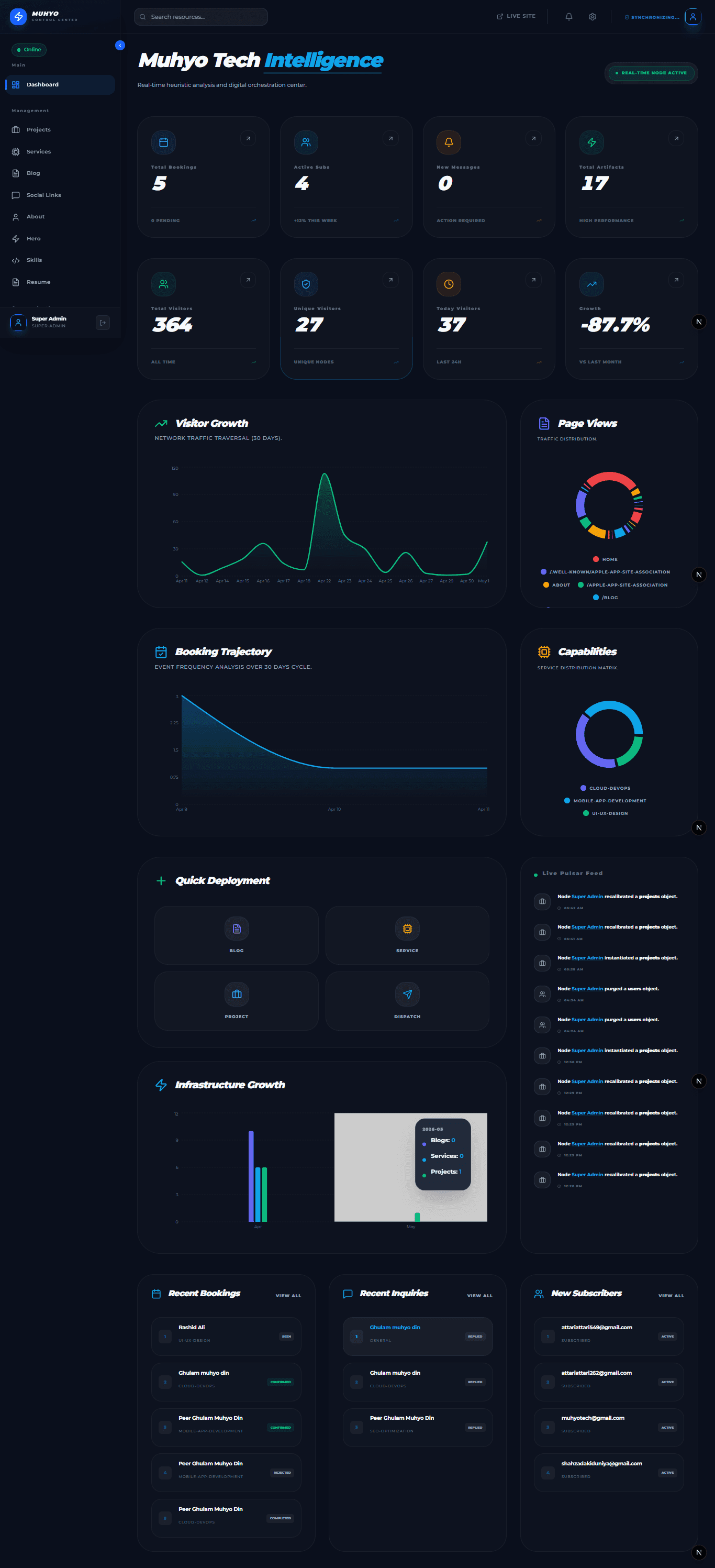
Muhyo Tech Admin Console
Real-time content management and enterprise monitoring dashboard.

UI/UX
Nova Real Estate Muhyo Tech
Advanced property management system with immersive 3D walkthroughs.

AI Web Automation
AI Editorial Planner & Blog Automation
A controlled publishing workflow that turns duplicate-checked topic plans into reviewable supporting and pillar article drafts.
Want a Similar Project?
Let's discuss your idea and build a modern, scalable, and professional web solution for your business.