


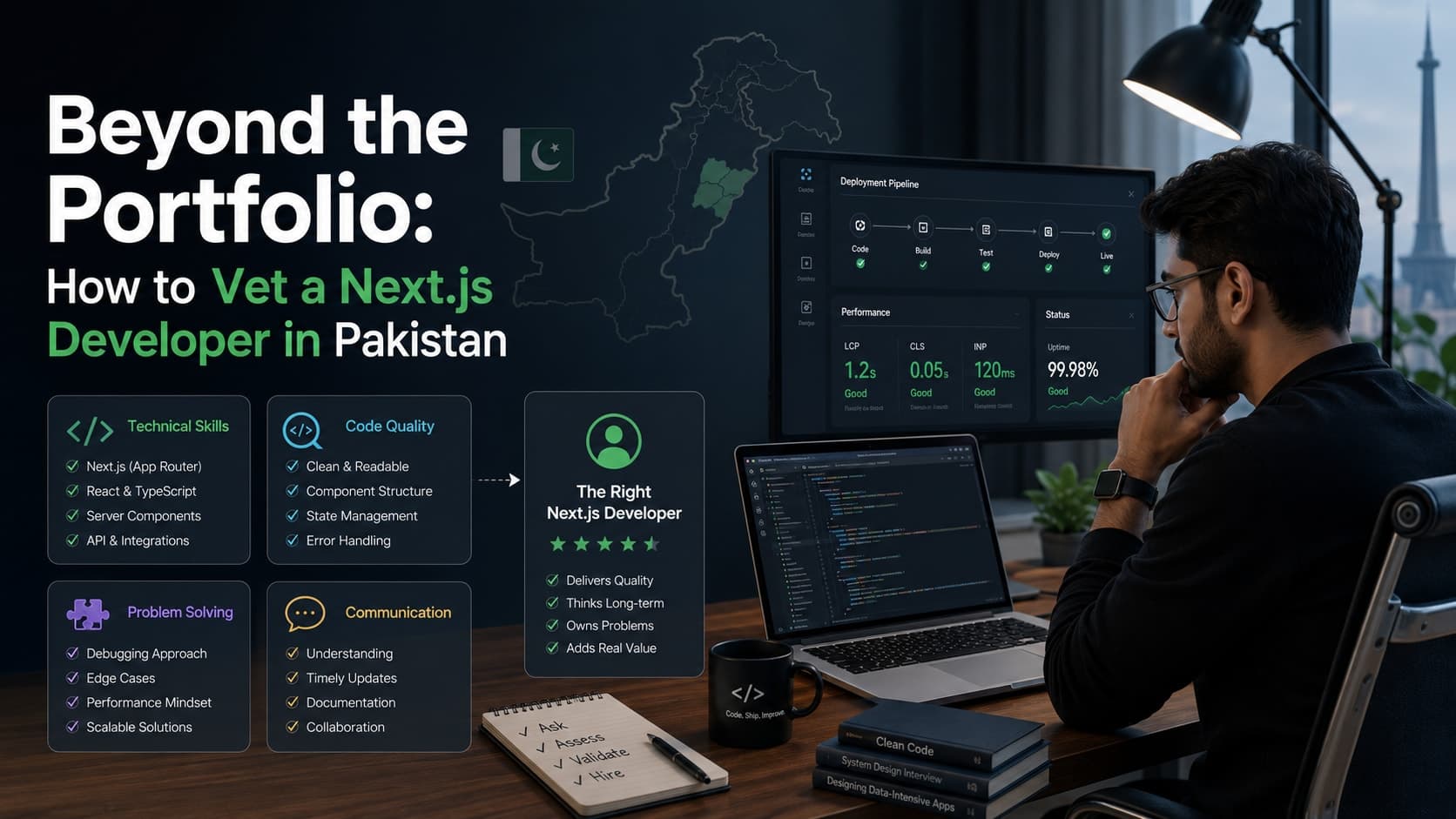
When you set out to hire a Next.js developer in Pakistan, the initial search often feels overwhelming. You're bombarded with portfolios, hourly rates, and promises of speedy delivery.
But how do you really differentiate between someone who can build a simple landing page and an engineer who can deliver a robust, scalable web application?
The Pitfall of Surface-Level Evaluation
Many founders and project managers focus on what's easiest to see: a flashy portfolio, a low hourly rate, or a quick promise of completion. This approach, while tempting, often leads to significant headaches down the line.
Undetected technical debt, performance bottlenecks, or poor SEO implementation can cost far more in rework and lost business than the initial savings on a cheaper hire. At Muhyo Tech, we've seen projects falter when the foundational engineering isn't sound.
Beyond Code: Technical Discovery & Architecture Judgment
A strong Next.js developer isn't just a coder; they're a problem solver and an architect. Their ability to ask incisive questions during the discovery phase is a critical indicator.
Do they probe into your business goals, target audience, and long-term vision, or do they immediately jump to solutions? Look for a developer who helps define the 'why' before the 'how'.
Assessing Architectural Acumen
Good architecture prevents future crises. When evaluating, present a complex scenario and observe their thought process. Do they consider data flow, API integrations, and potential scaling challenges?
A seasoned developer will discuss server-side rendering (SSR), static site generation (SSG), and incremental static regeneration (ISR) with a clear understanding of their respective tradeoffs for your specific use case. They won't just recommend the latest trend.
SEO, Performance, and User Experience: The Unsung Heroes
Next.js is celebrated for its built-in SEO and performance benefits, but these advantages aren't automatic. A developer must know how to leverage them effectively.
Ask about their approach to metadata, structured data, image optimization, and core web vitals. Do they understand how to implement an effective content strategy within a Next.js application?
Prioritizing Speed and Responsiveness
A fast, responsive website is no longer a luxury; it's a requirement for user retention and search engine rankings. Inquire about their strategies for code splitting, lazy loading components, and efficient data fetching.
We often find that developers who truly understand performance think about it from the very first line of code, not as an afterthought. This mindset is crucial for Next.js website development that delivers real business value.
Communication and Project Ownership
Technical skill is vital, but effective communication and a sense of ownership are equally important. A developer who can clearly articulate technical concepts, provide regular updates, and proactively identify risks saves you immense stress and time.
During interviews, assess their English proficiency and their ability to explain complex ideas simply. Do they listen actively, or do they just wait for their turn to speak?
The Value of Proactive Problem Solving
We look for developers who don't just execute tasks but take ownership of the project's success. This means anticipating potential issues, suggesting improvements, and taking initiative when obstacles arise.
A developer who treats your project as their own is an invaluable asset, ensuring smoother progress and a higher quality outcome. This level of dedication is what sets apart a good developer from a truly great one for full-stack web app development.
Testing, Deployment, and Maintenance: The Long Game
The development process doesn't end when the code is written. Robust testing, reliable deployment pipelines, and a clear plan for ongoing maintenance are crucial for long-term success.
Inquire about their experience with unit, integration, and end-to-end testing frameworks. How do they approach continuous integration and continuous deployment (CI/CD) with Next.js projects?
Ensuring Future Stability and Scalability
A good developer plans for the future. They consider how the application will scale as your business grows and how easily new features can be added without breaking existing functionality.
Discuss their approach to documentation and knowledge transfer. A well-documented project is easier to maintain and evolve, reducing future costs and risks for your business.
Final Thoughts: Investing in a Partner, Not Just a Resource
Hiring a Next.js developer in Pakistan isn't just about filling a technical role; it's about finding a reliable engineering partner. The true cost of a project isn't just the hourly rate; it's the total cost of ownership, including maintenance, scalability, and the impact on your business goals.
By focusing on these deeper technical and soft skills, you can significantly reduce your project risk and ensure you're building a digital asset that truly serves your business for years to come. Choose wisely, and you'll find an engineer who elevates your vision.