


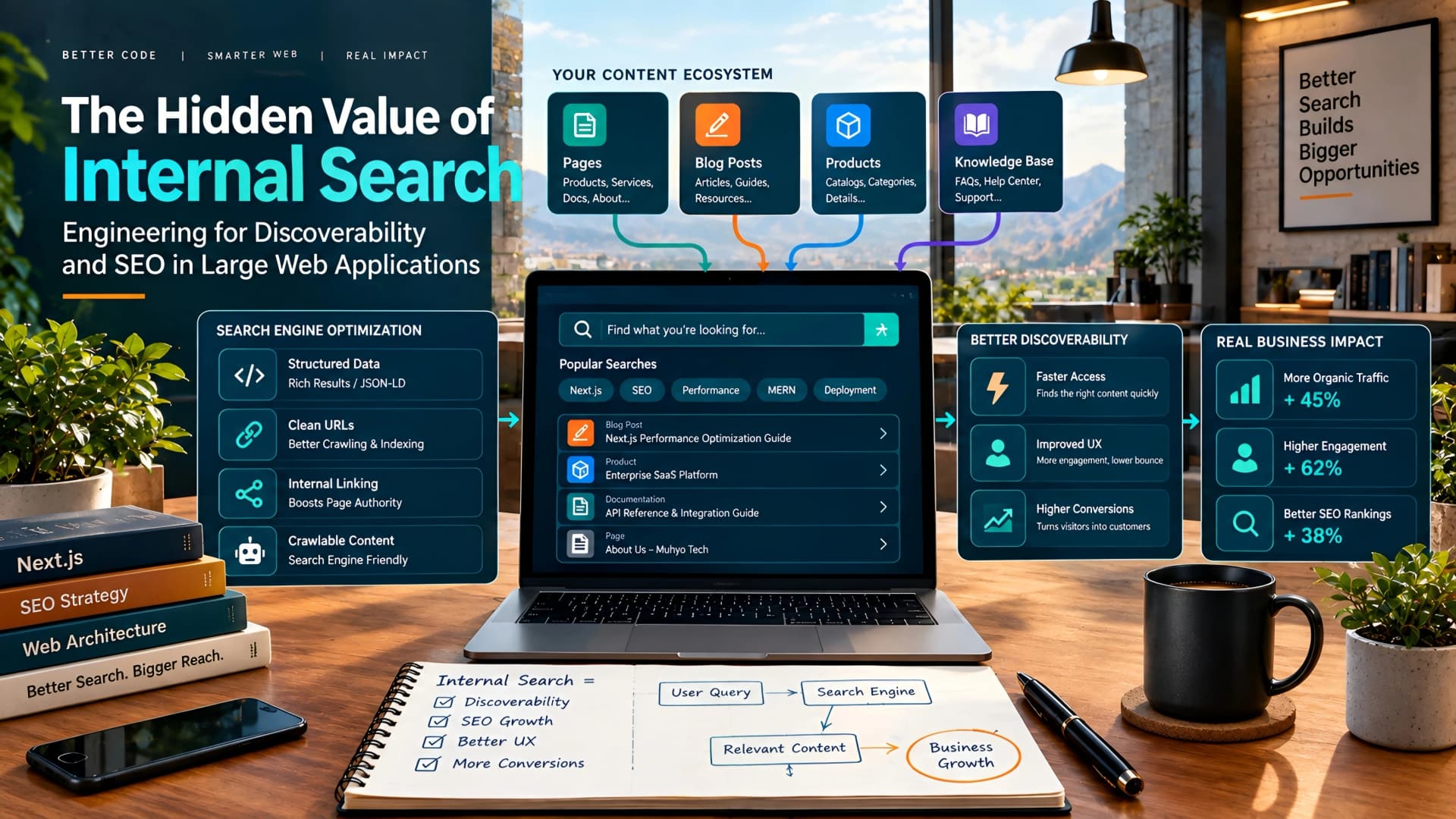
When we build large web applications, the internal search bar often gets treated as a secondary feature. It's there, it works, and users can find things. But this perspective misses a huge opportunity.
A well-engineered internal search system is a critical component for both user experience and technical SEO. It's a direct line to understanding what users genuinely seek, and it profoundly impacts content discoverability.
The Overlooked Power of Internal Search
Many development cycles focus on core features, leaving internal search as a functional afterthought. This can lead to frustration for users and missed opportunities for the business.
Poor internal search means users abandon your site or app when they can't find what they need. It also means you're flying blind, unaware of the content gaps or navigation issues your users are encountering.
Why Internal Search is a Technical SEO Goldmine
While internal search results pages themselves usually shouldn't be indexed by external search engines, the data and user behavior they generate are invaluable. They offer a direct feedback loop on content relevance and user intent.
Monitoring internal search queries reveals precise language users employ, highlighting popular topics, missing content, and even potential long-tail keywords for your external SEO strategy. This data can inform your content roadmap directly.
Architecting for Optimal Internal Search Experience
At Muhyo Tech, our approach to internal search starts with understanding user intent and content structure. We design systems that are fast, accurate, and provide relevant results.
This involves careful consideration of the underlying search engine technology, indexing strategies, and the user interface for presenting results.
Key Engineering Considerations for Internal Search
Building a robust internal search isn't just about plugging in a library; it requires a thoughtful engineering strategy. We focus on several core areas to ensure both user satisfaction and data utility.
These considerations range from initial data indexing to how results are presented and analyzed.
1. Structured Data for Search Results
When presenting internal search results, using structured data can enhance clarity and user understanding. While not directly for external SEO in this context, it standardizes information for better internal parsing.
This includes marking up individual result items with schema.org types like Product, Article, or Event. It helps the UI render consistent, rich snippets within your own application.
2. Optimizing Search Facets and Filters
Large web applications often have vast amounts of content or products. Effective filtering and faceting are crucial for users to narrow down results efficiently.
We engineer dynamic facets based on content attributes, ensuring they are performant and logically organized. This prevents overwhelming users with too many options and helps them quickly reach relevant content.
3. Logging Search Queries for Insights
The most significant external SEO benefit from internal search comes from logging and analyzing query data. This raw data tells you exactly what users are looking for.
We implement robust logging mechanisms that capture search terms, result clicks, and even 'no results found' instances. This data forms the foundation for content and SEO strategy.
4. Preventing Internal Search Results from External Indexation
It's critical to prevent search engines like Google from indexing your internal search results pages. These pages often contain duplicate content, low-quality content, or parameters that create an infinite crawl space.
We typically use robots.txt directives and <meta name="robots" content="noindex, nofollow"> tags on all internal search results pages. This ensures search engines focus on your canonical content.
Leveraging Internal Search Data for External SEO and Content Strategy
The insights gained from internal search queries are a goldmine for refining your external SEO and content strategy. It's like having a direct line to your audience's unspoken needs.
This data allows you to proactively create content that addresses real user demand, improving your organic search visibility over time.
Identifying Content Gaps
When users consistently search for terms that yield 'no results' or irrelevant results, it signals a content gap. This is a clear indicator that you need to create new content around those topics.
By addressing these gaps, you not only improve the internal user experience but also create valuable content that can rank externally.
Refining Keyword Strategy
Internal search queries often include long-tail keywords or specific phrasing that might not appear in traditional keyword research tools. These are highly valuable for refining your external SEO.
Incorporating these natural language queries into your content strategy can help you capture highly motivated search traffic.
Comparison: Internal Search Solutions
Choosing the right internal search solution depends on the scale, complexity, and specific requirements of your application. There's no one-size-fits-all answer.
We often evaluate options based on factors like performance, scalability, ease of integration, and feature set.
| Feature | Custom-Built (e.g., Elasticsearch) | Off-the-Shelf (e.g., Algolia, Swiftype) |
|---|---|---|
| Control & Customization | Maximum flexibility; build exactly what's needed. | Limited by platform capabilities; easier setup. |
| Maintenance & Operations | Requires dedicated DevOps/engineering effort. | Managed service; less operational overhead. |
| Scalability | Scales with infrastructure investment and engineering. | Built-in scalability, often with tiered pricing. |
| Cost Model | Upfront development + infrastructure. | Subscription-based, often usage-dependent. |
| Integration Complexity | Higher initial integration effort. | Generally simpler API integration. |
| Analytics & Insights | Requires custom logging and analytics setup. | Often includes robust analytics dashboards. |
Muhyo Tech's Approach to Internal Search Excellence
Our engineering philosophy emphasizes robust, maintainable systems that deliver real business value. For internal search, this means a blend of performance, user-centric design, and data utility.
We look for opportunities to integrate internal search insights directly into content creation workflows, making the engineering work serve a broader strategic purpose.
Checklist for Internal Search Optimization
- Index Relevant Content: Ensure all discoverable content is properly indexed.
- Exclude Irrelevant Content: Prevent indexing of admin pages, duplicate content, or sensitive data.
- Implement Nofollow/Noindex: Apply
noindex, nofollowto all internal search results pages. - Canonicalize Search URLs: If parameters are used, ensure canonical tags point to non-search pages where appropriate.
- Log Search Queries: Capture every query, timestamp, and 'no results' instance.
- Monitor Search Performance: Track speed and accuracy of results.
- Optimize Facets & Filters: Ensure intuitive and fast refinement options.
- Implement Autocomplete/Suggestions: Enhance user experience and guide queries.
- Regularly Review Data: Analyze search terms for content gaps and keyword opportunities.
- Handle Typo Tolerance: Implement fuzzy matching for common misspellings.
Frequently Asked Questions
How does internal search impact external SEO?
Internal search directly impacts external SEO by providing invaluable user data. Analyzing internal search queries reveals what users are actively seeking, highlighting content gaps and popular topics that can then be addressed with new, optimized content for external search engines. It also improves user engagement on your site, which can indirectly signal quality to search engines.
What are the technical SEO best practices for internal site search?
Key technical SEO best practices include preventing internal search results pages from being indexed (using robots.txt and noindex meta tags), ensuring fast search performance, and logging all search queries. You should also ensure that the search functionality itself doesn't create crawl traps or generate an infinite number of low-value URLs that could waste crawl budget.
How can I prevent internal search results from being indexed?
To prevent internal search results from being indexed, apply a <meta name="robots" content="noindex, nofollow"> tag within the <head> section of all search results pages. Additionally, include directives in your robots.txt file to disallow crawling of URLs containing common search parameters (e.g., Disallow: /*?s= or Disallow: /search/). This guides search engines away from these pages.
What data can I get from internal site search and how can I use it?
You can gather data on search queries, 'no results found' queries, search result clicks, and user behavior after a search. This data is crucial for identifying content gaps (terms searched but not found), discovering new keyword opportunities for external SEO, understanding user intent, and improving your site's navigation and information architecture. It's a direct feedback loop from your users.
The Long-Term Value of a Smart Search System
Treating internal search as a strategic asset, rather than just a functional checkbox, yields significant long-term benefits. It's about more than just finding content; it's about understanding your audience deeply.
By engineering internal search with care, we empower users, refine content strategies, and ultimately build more discoverable and valuable web applications. This is how practical engineering translates into stronger reliability and better user experiences.