


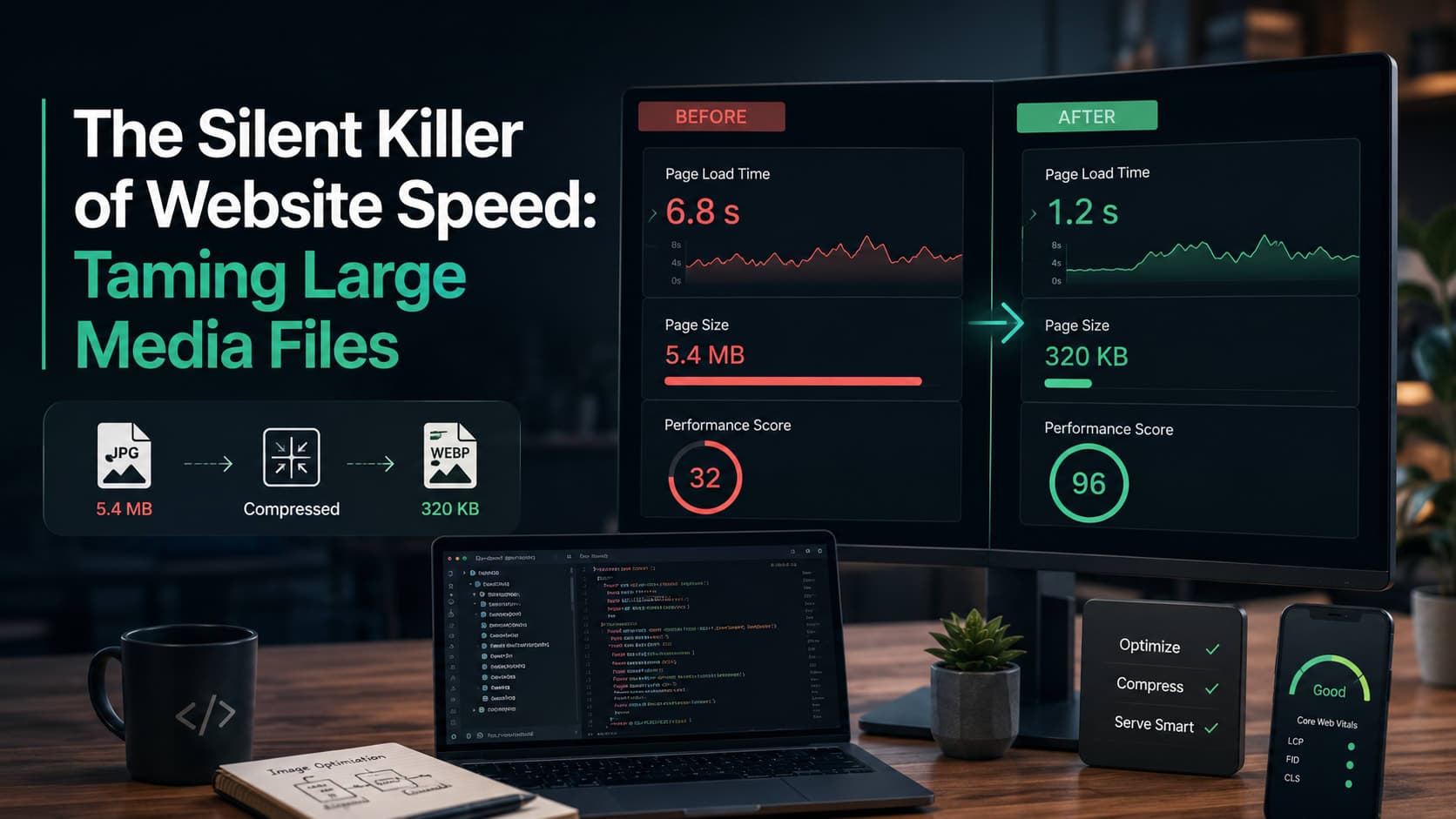
We've all been there: a beautiful website, full of engaging content, yet it crawls to a halt. Often, the culprit isn't complex backend logic or inefficient databases, but something much more visual: unoptimized images and media files.
These silent killers can bloat page sizes, delay content rendering, and frustrate users, directly impacting conversion rates and SEO rankings. At Muhyo Tech, addressing this is a foundational step in building any high-performing digital experience.
The Hidden Cost of Unoptimized Images
Imagine a product page with stunning high-resolution photography. While visually appealing, if those images aren't optimized, they demand significant bandwidth and processing power from the user's device.
This leads to slow loading times, especially on mobile networks or older devices. The result is a poor user experience, where visitors might abandon the site before they even see the full content.
For business owners, this translates directly into lost opportunities, higher bounce rates, and a negative perception of their brand's professionalism and reliability.
Our Approach: Diagnosing the Media Bottleneck
When we encounter a slow website, our first step often involves a thorough audit of its media assets. We use tools to identify oversized images, incorrect formats, and inefficient loading strategies.
Many sites mistakenly serve full-resolution images, thinking it's always better, even when they're displayed at a fraction of their original size. This wastes bandwidth and slows down the entire page.
Our diagnosis focuses on understanding the actual display needs for each image across different devices and screen sizes.
Engineering the Solution: Responsive Formats, Sizing, and Caching
Our solution to robust website image optimization combines several powerful techniques. We don't just compress images; we implement a holistic strategy.
First, we embrace modern image formats like WebP or AVIF. These formats offer superior compression without noticeable quality loss compared to older JPEGs and PNGs.
Second, we implement responsive image techniques. This means serving different image sizes based on the user's device and viewport, ensuring a phone user doesn't download a desktop-sized image.
Third, browser caching and Content Delivery Networks (CDNs) are critical components. Caching ensures that once an image is downloaded, it's stored locally, speeding up subsequent visits.
CDNs distribute images globally, delivering them from servers geographically closer to the user, further reducing latency.
At Muhyo Tech, we design systems where image optimization isn't an afterthought but an integrated part of the content pipeline. This ensures long-term performance and maintainability.
Implementing Responsive Image Markup
For developers, this often means moving beyond simple <img src=""> tags. We leverage the <picture> element and srcset attribute.
The <picture> element allows us to specify multiple image sources, letting the browser pick the most appropriate one based on media queries or format support.
The srcset attribute, used within an <img> tag, provides a list of different image sizes and their respective widths. The browser then intelligently chooses the best fit for the user's screen resolution and pixel density.
This granular control ensures images are delivered efficiently without sacrificing visual quality on high-density displays.
Automating Image Workflows for Scalability
Manually optimizing every image is impractical for content-rich websites. Our engineering approach often involves automating this process.
We integrate image optimization into the build process or use cloud-based image services. These tools can automatically resize, reformat, and compress images upon upload.
This automation saves significant time, reduces human error, and ensures consistent performance across the entire site, especially as content scales.
The Tradeoffs and Long-Term Value
Implementing a comprehensive image optimization strategy does require an initial investment in development time. It means rethinking how media is handled from design to deployment.
However, the long-term benefits far outweigh these upfront costs. Faster load times lead to better user engagement, improved SEO rankings, and ultimately, stronger business outcomes.
A website that feels snappy and responsive builds trust and confidence with its audience. It's an investment in a superior user experience and a more efficient digital presence.
Beyond Images: A Holistic Performance View
While image optimization is a critical piece, it's part of a larger puzzle for overall website performance. At Muhyo Tech, we look at every aspect: efficient code, optimized databases, server response times, and effective caching strategies.
Our goal is to deliver digital platforms that are not just visually appealing but also robust, fast, and scalable. This holistic approach ensures long-term reliability and adaptability.
We believe that a well-engineered website should load quickly, regardless of the user's device or connection. It's a fundamental expectation in today's digital world, and it's a standard we uphold in all our projects.