


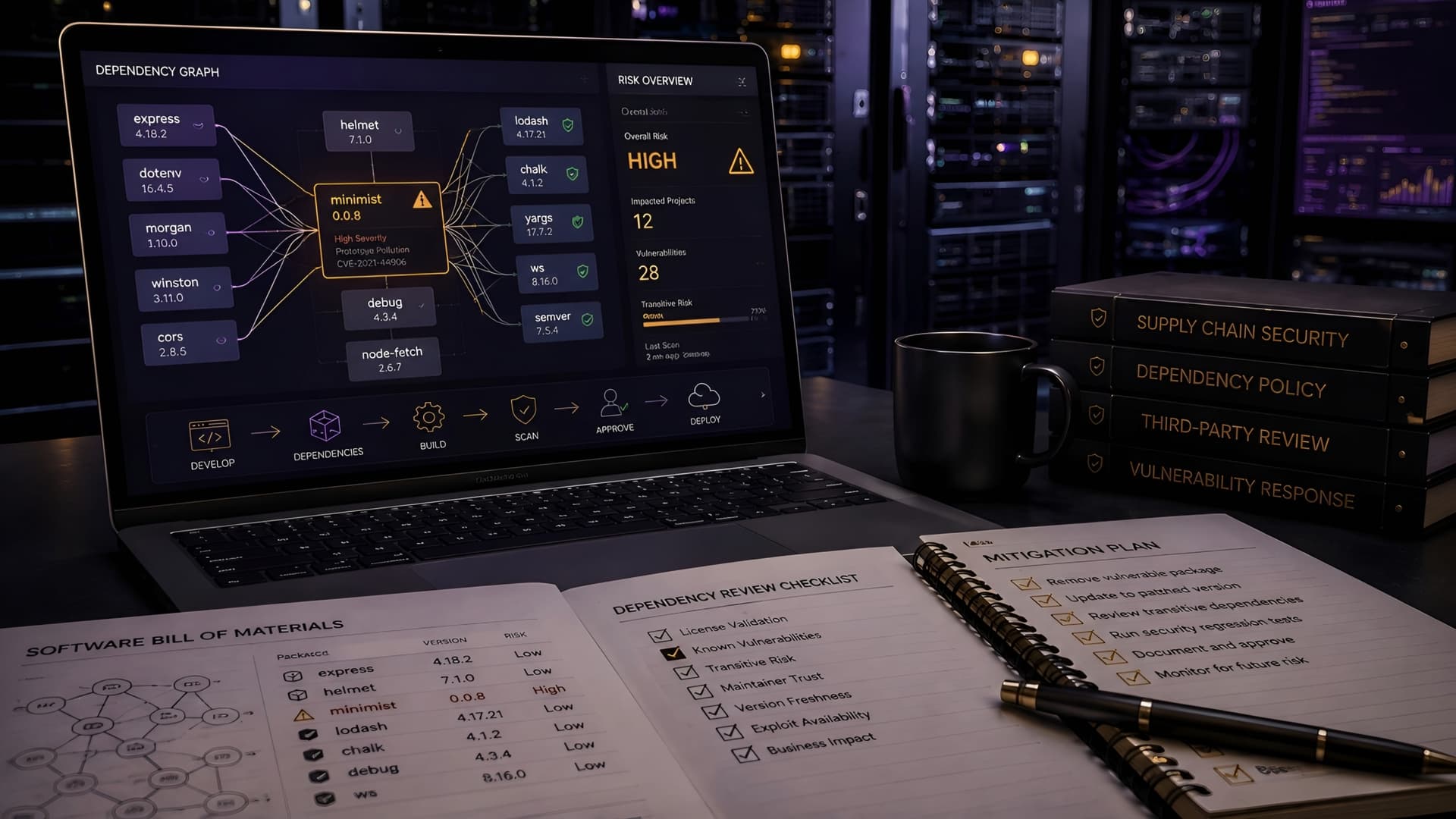
Every Node.js project relies on a vast ecosystem of third-party packages. These dependencies accelerate development immensely, but they also introduce a significant attack surface: the software supply chain.
A single compromised package, deep within your dependency tree, can open a critical vulnerability. At Muhyo Tech, we’ve seen how quickly this can turn a stable application into a potential liability.
The Silent Threat of Transitive Dependencies
It's easy to focus on the direct packages you install. However, the real complexity, and often the greatest risk, lies in transitive dependencies—packages your direct dependencies rely on.
A typical Node.js application can pull in hundreds, sometimes thousands, of these indirect packages. Each one represents a potential entry point for malicious code or an unpatched vulnerability.
Proactive Vulnerability Scanning with npm audit
The first line of defense is awareness. The npm audit command, built directly into npm, is an invaluable tool for identifying known vulnerabilities in your project's dependencies.
Running npm audit regularly, both during development and as part of your CI/CD pipeline, provides a snapshot of your current risk profile. It highlights critical, high, medium, and low severity issues, often suggesting fixes.
Understanding npm audit's Output
When npm audit reports vulnerabilities, it categorizes them by severity and provides details about the affected package, the nature of the vulnerability, and often, a suggested command to fix it. These fixes usually involve upgrading to a version of the package where the vulnerability has been patched.
Sometimes, a direct upgrade isn't possible due to breaking changes in newer versions. In such cases, careful consideration and potentially refactoring parts of your code might be necessary. This is a common engineering tradeoff we manage: security vs. development effort.
Deepening Your Scans with Specialized Tools like Snyk
While npm audit is a great starting point, tools like Snyk offer a more comprehensive approach to Node.js dependency security. Snyk goes beyond known vulnerabilities by also checking for misconfigurations and license compliance issues.
Integrating Snyk into your development workflow provides continuous monitoring, alerting you to new vulnerabilities as soon as they are discovered. This proactive stance is crucial for maintaining application integrity over time.
Beyond Just Scanning: Continuous Monitoring
The threat landscape is constantly evolving. New vulnerabilities are discovered daily, even in widely used packages. Relying on a one-time scan is insufficient.
Our approach at Muhyo Tech emphasizes continuous integration of security checks. This means integrating tools like Snyk or similar vulnerability scanners into every pull request and nightly build, ensuring new code doesn't introduce new risks. This aligns with our commitment to robust Fortifying Your Node.js Applications: An Engineering Guide to Web Security Best Practices.
Strategic Package Selection and Maintenance
Prevention is always better than cure. Thoughtful package selection is a critical, often overlooked, aspect of dependency security. We evaluate packages not just on functionality but also on their security posture.
Look for packages that are actively maintained, have a strong community, and ideally, provide security advisories or have a history of quickly patching vulnerabilities. A well-maintained package is less likely to harbor unaddressed security flaws.
Keeping Dependencies Updated
Regularly updating your dependencies is paramount. Older versions are more likely to contain known, unpatched vulnerabilities. While this can sometimes introduce breaking changes, the security benefits usually outweigh the refactoring effort.
We often use tools like Dependabot or Renovate Bot to automate dependency updates. These bots create pull requests for available updates, making the process smoother and more consistent. This helps reduce the long-term maintenance risk for web applications.
The Principle of Least Privilege for Dependencies
Just like users, packages should operate with the minimum necessary permissions. When a package requests access to sensitive system resources during installation or execution, it's worth a second look.
While Node.js packages generally run within the application's sandbox, understanding what a dependency *could* do if compromised is important. Reviewing package scripts in package.json for unusual commands can reveal potential risks.
Implementing a Dependency Lock File Strategy
Using a lock file (package-lock.json or yarn.lock) is non-negotiable for reproducible builds and security. These files pin the exact versions of all your direct and transitive dependencies.
This ensures that everyone on your team, and your production environment, is using the identical set of packages. It prevents unexpected version changes from introducing new vulnerabilities or breaking functionality between deployments.
Conclusion: A Proactive Stance for Stronger Applications
Managing Node.js dependency security is an ongoing commitment, not a one-time task. It requires a blend of automated tools, diligent practices, and a culture of security awareness within your development team.
By proactively scanning, strategically selecting packages, and maintaining a robust update strategy, you significantly reduce the risk of supply chain attacks. This commitment to security translates directly into stronger, more reliable applications and less stress for project owners. It's how we build trust and ensure long-term stability in the digital services we engineer.