


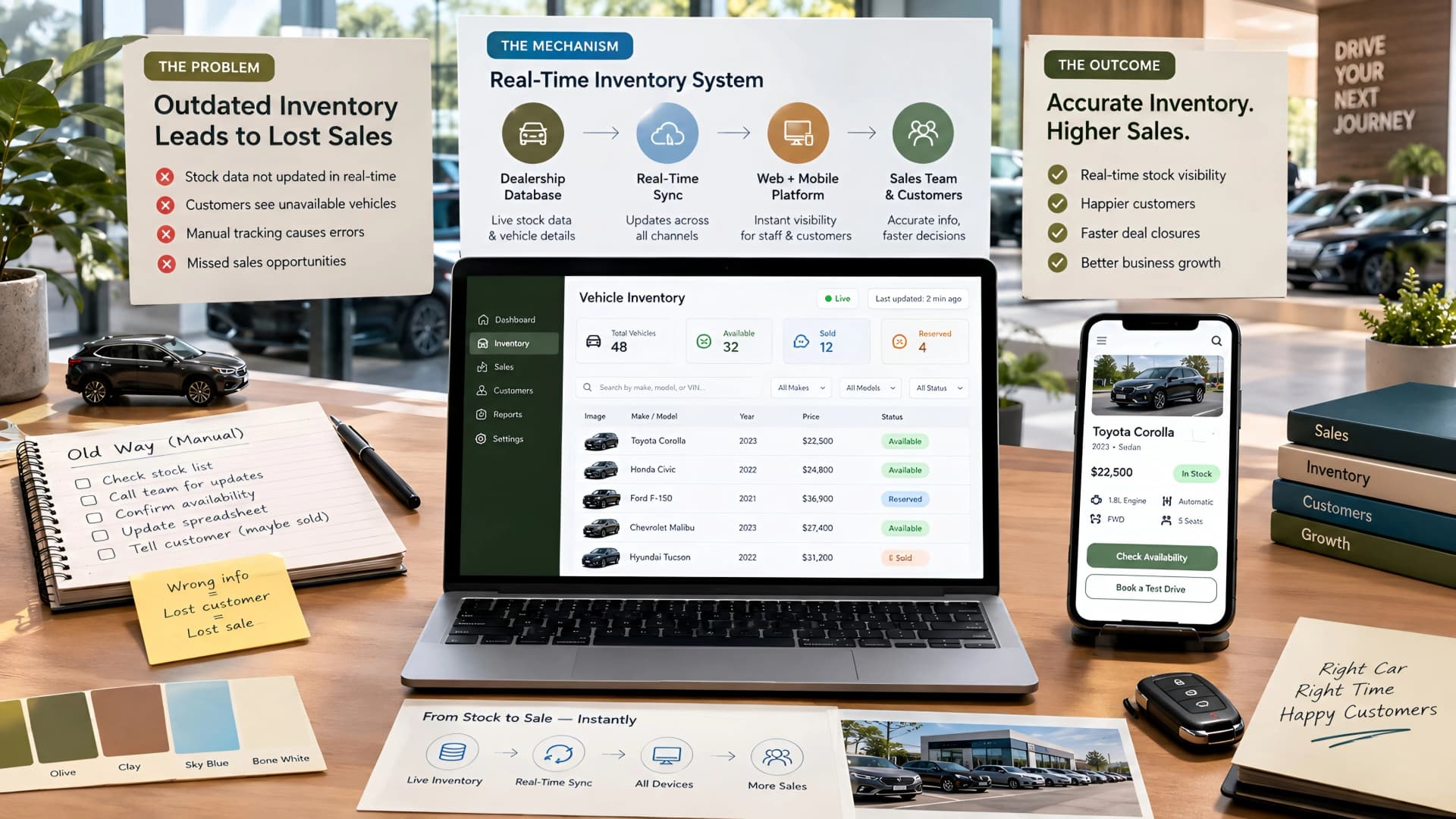
Few things are more frustrating for a potential car buyer than finding the perfect vehicle online, only to discover it was sold days ago. This disconnect between online listings and actual stock isn't just an inconvenience; it's a direct sales killer for automotive dealerships.
Stale inventory data erodes customer trust and wastes valuable lead generation efforts. At Muhyo Tech, we’ve seen how quickly this problem can turn an interested prospect into a frustrated bounce.
The Pain of Stale Inventory Data
Imagine a customer spends hours sifting through online listings, finds a model that checks all their boxes, and even begins to picture themselves driving it. They drive to the dealership, only to be told the car is gone. This scenario plays out daily across the industry.
Beyond customer frustration, outdated data creates operational headaches. Sales teams waste time tracking down unavailable vehicles, and marketing campaigns promote cars that are no longer on the lot. It's a fundamental breakdown in the digital sales pipeline.
Architecting a Real-Time Solution
Building a truly real-time car inventory system isn't just about refreshing a webpage more often. It requires a thoughtful architectural approach that ensures data consistency and immediate updates across all platforms. Our goal is to connect your internal systems directly to your customer-facing website.
This means integrating your dealership management system (DMS) or internal database with a robust web application. We aim for a seamless flow of information from the moment a car arrives on the lot to the second it drives off.
Core Components of a Dynamic System
Database Integration and APIs
At the heart of any real-time system is solid database integration. Your inventory data, whether in a legacy DMS or a modern cloud database, needs to be accessible and structured for rapid queries. We often design a dedicated inventory database that acts as the single source of truth, pulling data from various internal systems.
This database is then exposed through a secure and efficient API (Application Programming Interface). This API becomes the bridge, allowing your website and other digital platforms to request and receive the most current vehicle information instantly. For more on building a comprehensive digital strategy, refer to our foundational guide: Modern Dealership: A Digital Blueprint for Automotive Sales & Service.
Data Synchronization Strategies
Achieving real-time means minimizing the delay between an event (like a sale or new arrival) and its reflection online. We typically employ a hybrid approach to data synchronization. For critical updates, we lean on event-driven architectures.
When a vehicle status changes in the DMS, an event is triggered, pushing that update immediately to the inventory database and subsequently to the website. For less time-sensitive data, a regular polling mechanism can supplement, ensuring nothing is missed. This combination balances immediacy with system stability.
Choosing the Right Technologies
The choice of technologies is crucial for scalability and maintainability. For the backend, modern frameworks like Node.js or Python (with Django/Flask) coupled with robust databases like PostgreSQL or MongoDB are excellent choices. These provide the flexibility and performance needed for real-time operations.
On the frontend, frameworks such as React, Vue, or Next.js enable dynamic user interfaces that can update vehicle listings without full page reloads. These technologies, part of our full-stack web app development approach, allow for a snappy, responsive customer experience.
Ensuring Data Consistency and Concurrency
One of the trickiest aspects of real-time systems is maintaining data consistency, especially when multiple users or processes might try to update the same vehicle record. We implement robust concurrency controls.
This often involves optimistic locking or transactional integrity, ensuring that only one update succeeds at a time or that conflicting updates are properly handled. Error logging and robust rollback mechanisms are also critical for data integrity.
The Business Impact: Trust and Sales
Implementing a real-time car inventory system transforms the online customer journey. Prospects can browse with confidence, knowing the cars they see are actually available. This dramatically reduces frustration and builds immediate trust.
For dealerships, it means fewer wasted sales leads and more qualified customers walking through the door. Sales teams can focus on selling, not on correcting outdated information. It's an investment that pays off in both customer satisfaction and operational efficiency.
At Muhyo Tech, we prioritize engineering solutions that solve real business problems. A real-time inventory system isn't just a technical upgrade; it's a strategic move that directly impacts your dealership's bottom line and strengthens your brand's reliability.
By eliminating the gap between online presence and physical inventory, dealerships can deliver a superior customer experience. This leads to higher conversion rates, stronger customer relationships, and ultimately, more cars sold.