


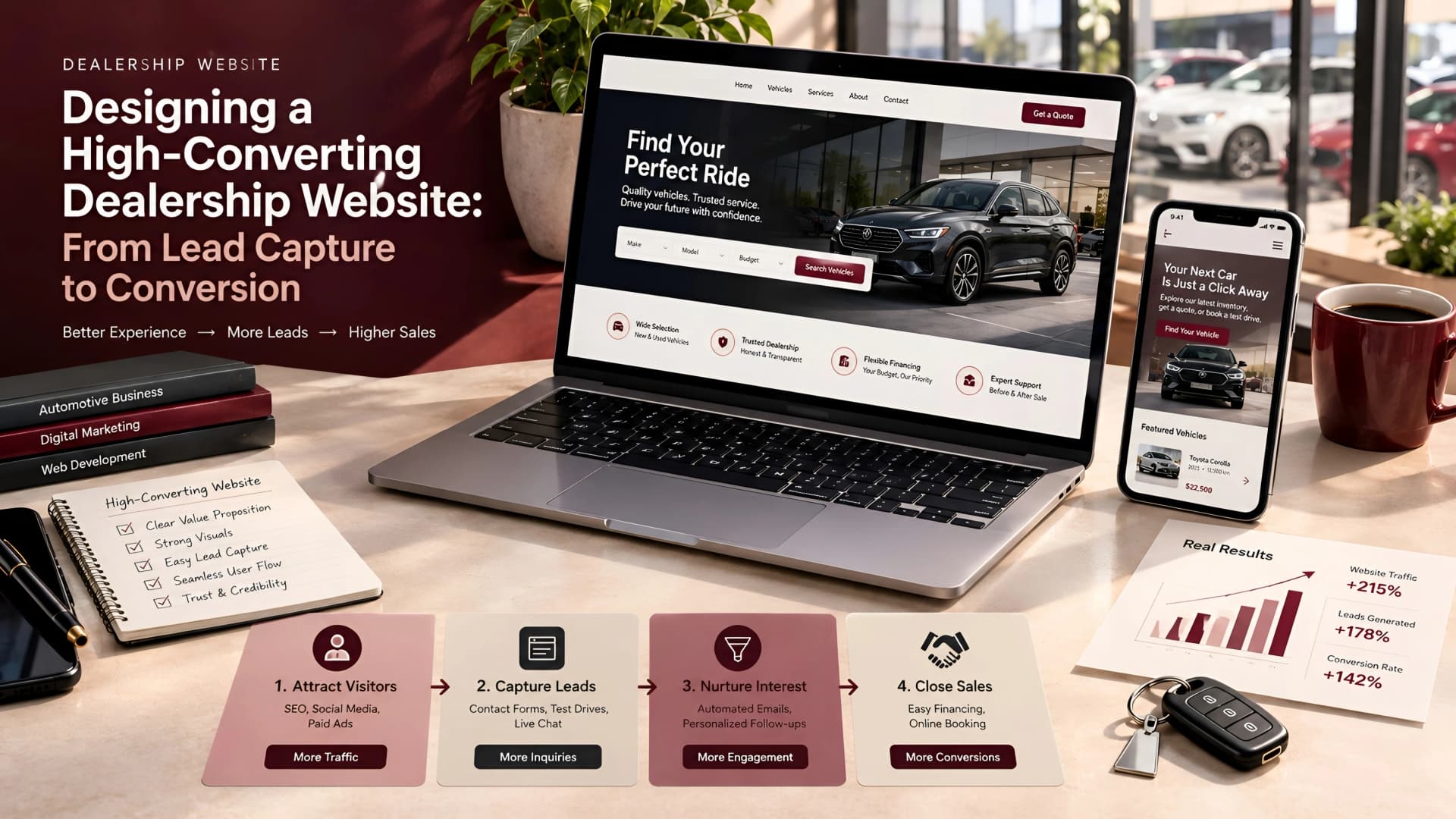
A dealership website isn't just an online brochure; it's a critical sales tool. Yet, many still struggle with high bounce rates and low lead conversion.
This often stems from a disconnect between user expectations and the site's ability to guide them toward a purchase decision.
In our foundational guide, "Modern Dealership: A Digital Blueprint for Automotive Sales & Service", we discussed the broader digital transformation. Here, we'll dive into the specifics of engineering a website that truly converts.
Understanding the Dealership Website's Core Purpose
The primary goal of any dealership website is to move a prospective buyer through the sales funnel. This means more than just displaying inventory.
It involves providing a seamless, informative, and trust-building experience that encourages inquiries, test drives, and ultimately, purchases.
We approach this by focusing on clear user journeys and removing friction points.
User Experience (UX) as the Foundation for Conversion
A frustrating website experience is a conversion killer. Users expect speed, clarity, and ease of navigation, especially when making a significant purchase decision like a car.
This means prioritizing mobile responsiveness and intuitive layouts, ensuring the site performs flawlessly on any device.
At Muhyo Tech, our website redesign process often starts with a deep dive into user behavior analytics, identifying where potential customers drop off.
Mobile-First Design Isn't Optional Anymore
The majority of car shoppers begin their journey on a mobile device. If your site isn't optimized for smaller screens, with fast loading times and easy-to-tap buttons, you're losing leads.
We design and develop with a mobile-first philosophy, ensuring the core functionality and content are accessible and engaging from the outset.
This often involves carefully balancing rich media with performance optimization.
Showcasing Inventory: Beyond Just Listings
The vehicle inventory is the heart of a dealership website, but how it's presented makes all the difference. High-quality images, detailed specifications, and transparent pricing are non-negotiable.
More importantly, the display needs to be interactive, allowing users to filter, sort, and compare vehicles easily.
Imagine a customer trying to find a specific trim level; a clunky filter system will send them elsewhere.
Key Inventory Display Features We Prioritize:
- High-Resolution Images & Video: Multiple angles, interior shots, and even short walk-around videos build trust and engagement.
- Detailed Specifications: Beyond make and model, include engine size, fuel economy, safety features, and technology packages.
- Transparent Pricing: Clear pricing, financing options, and any special offers prevent sticker shock later and build credibility.
- Robust Filtering & Search: Allow users to narrow down choices by make, model, year, price, mileage, features, and even body style.
- Vehicle Comparison Tool: Empower users to directly compare two or more vehicles side-by-side, highlighting differences.
Strategic Call-to-Actions (CTAs) for Lead Capture
Once a user finds a vehicle of interest, the next step must be immediately obvious. Clear, compelling calls-to-action are vital for converting interest into a lead.
These CTAs should be strategically placed throughout the site, not just on vehicle detail pages.
We focus on actionable language and prominent button design to guide users effortlessly.
Effective CTAs for Dealership Websites:
- "Schedule a Test Drive"
- "Get E-Price"
- "Value Your Trade"
- "Apply for Financing"
- "Check Availability"
- "Chat with Us"
Each CTA should lead to a simple, efficient form or a direct communication channel. Too many fields or a confusing process will deter potential leads.
Building Trust and Streamlining the Process
Buying a car is a significant decision, often accompanied by a degree of skepticism. A dealership website must proactively build trust.
This includes clear contact information, readily available customer reviews, and easy access to financing tools.
Our custom website development ensures that these trust elements are integrated seamlessly into the user flow.
Online Tools and Resources:
- Financing Calculators: Help users understand potential monthly payments.
- Online Credit Applications: Streamline the pre-approval process.
- Customer Testimonials & Reviews: Social proof is incredibly powerful.
- Service Scheduling: For existing customers, an easy way to book maintenance builds loyalty.
- Chatbots & Live Chat: Provide instant answers and capture leads outside of business hours.
Measuring Success and Iterating for Improvement
Launching a high-converting website isn't a one-time event; it's an ongoing process. We integrate analytics tools from day one to track user behavior, conversion rates, and lead quality.
This data-driven approach allows us to identify bottlenecks and continually refine the user experience.
Our team treats website optimization as an iterative cycle, constantly looking for ways to improve performance and drive better business outcomes.
This continuous improvement mindset, often supported by our landing page design expertise for specific campaigns, ensures your digital presence evolves with market demands.
Conclusion: Engineering for the Modern Car Buyer
A high-converting dealership website is a complex system, but its underlying principles are clear: user-centric design, robust inventory management, and strategic lead capture. It demands careful engineering and a deep understanding of the buyer's journey.
By prioritizing these elements, dealerships can transform their online presence from a static display into a dynamic sales engine.
It's about making the digital experience as smooth and trustworthy as the in-person one.