


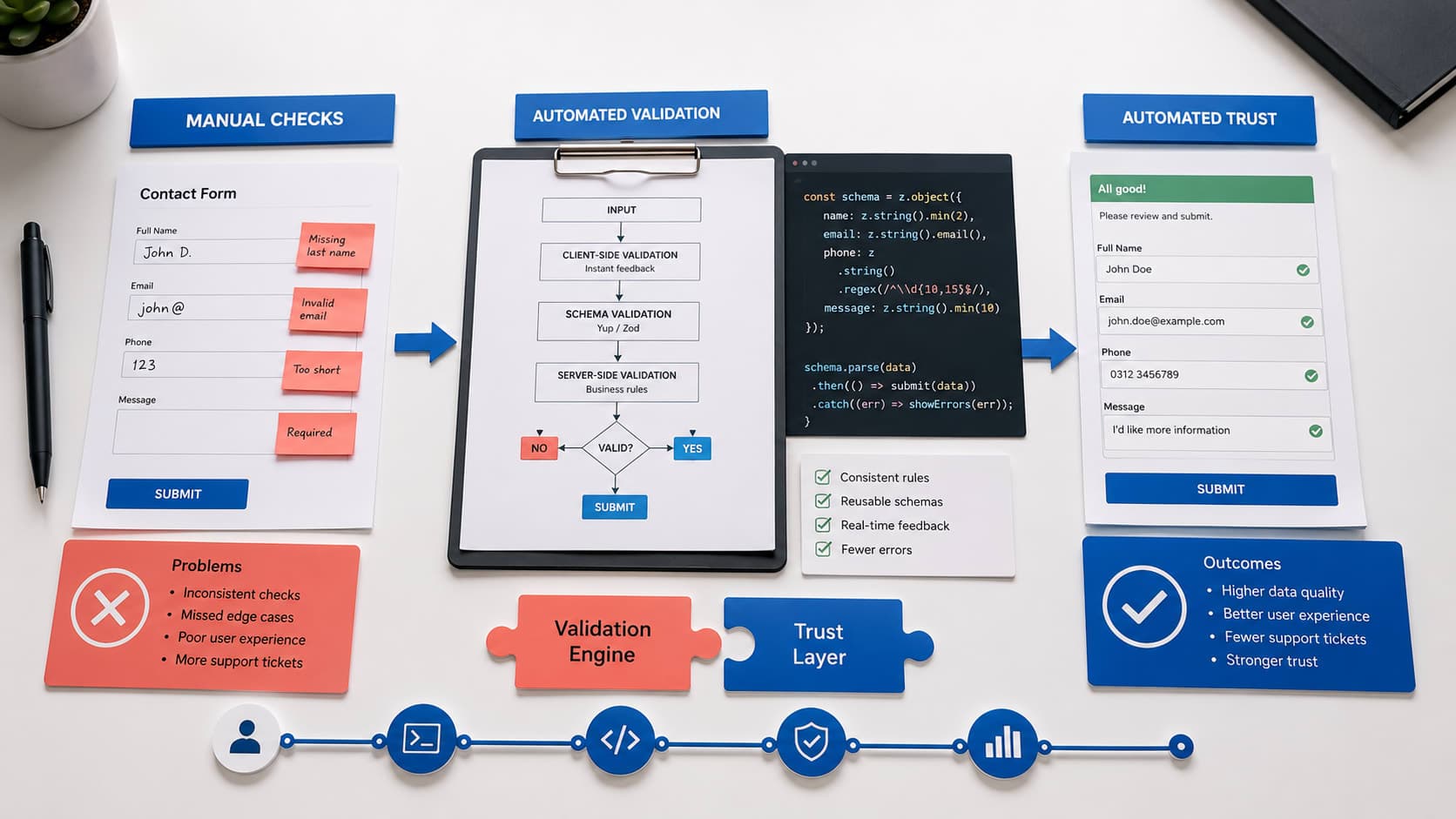
Forms are the gateway to almost every interactive web experience, from signing up for a service to submitting an order. Yet, poorly validated forms are a silent source of frustration for users and a significant headache for developers.
The pain of invalid data hitting your database, or users abandoning a form because of unclear error messages, is very real. It undermines trust and wastes precious engineering time on cleanup.
The Hidden Cost of Weak Form Validation
Many development teams start with basic client-side validation, which is a good first step for immediate user feedback. But relying solely on JavaScript in the browser is a recipe for data integrity issues and potential security vulnerabilities.
Malicious actors can easily bypass client-side checks, sending malformed data directly to your backend. Even well-intentioned users can encounter browser inconsistencies or network glitches that prevent proper validation before submission.
This leads to corrupt data in your system, requiring manual fixes, generating confusing reports, and ultimately eroding confidence in your application. The cleanup effort often costs far more than investing in a robust validation strategy upfront.
Our Approach: The Dual-Layer Validation Shield
At Muhyo Tech, we design form validation as a two-pronged defense system. It begins with user-friendly client-side feedback and culminates in an ironclad server-side validation.
This dual-layer approach ensures a smooth user experience while guaranteeing data integrity and system security. It's about proactive prevention rather than reactive damage control.
Client-Side Validation: Instant Feedback, Enhanced UX
Client-side validation provides immediate feedback, guiding users to correct errors before they even hit the submit button. This instant gratification significantly improves the user experience, reducing frustration and increasing conversion rates.
We use modern JavaScript frameworks and libraries to implement these checks efficiently. This ensures field formats are correct, required fields are filled, and passwords meet complexity requirements right in the browser.
For example, a user sees an email field turn red with a message like 'Please enter a valid email address' as soon as they type something incorrect. This prevents unnecessary server requests and provides a seamless interaction.
Server-Side Validation: The Unbreakable Safety Net
Regardless of client-side efforts, server-side validation is non-negotiable. This is the ultimate gatekeeper, ensuring that only clean, valid data ever makes it into your database.
Our backend systems rigorously re-validate every piece of data received from a form submission. This includes checking data types, lengths, formats, uniqueness constraints, and business logic rules that might be too complex or sensitive for the client side.
For instance, if a user tries to book a meeting, the server will not only check if the date format is correct but also verify that the chosen time slot is actually available and not double-booked. This is where true data integrity is enforced.
Engineering Robustness: Tools and Techniques
Building automated form validation isn't just about writing a few 'if' statements. It involves choosing the right tools and architectural patterns to make it maintainable, scalable, and secure.
We often leverage schema validation libraries like Zod or Joi in TypeScript/JavaScript environments. These allow us to define our data expectations once and use them for both client and server-side validation.
This 'single source of truth' for validation logic reduces duplication and the risk of inconsistencies between frontend and backend checks. It makes updates easier and reduces the chance of introducing bugs.
API-Driven Validation and Error Handling
For complex web applications, forms often submit data to APIs. Our APIs are designed with robust validation built directly into their endpoints.
When an API receives invalid data, it returns clear, structured error messages. These messages specify which fields are invalid and why, allowing the frontend to display precise feedback to the user.
This consistent error handling across the application simplifies debugging and ensures a predictable user experience, even when things go wrong.
The Business Impact: Trust, Efficiency, and Scalability
Investing in automated, robust form validation directly translates into significant business value. It's not just a technical detail; it's a foundational element of a reliable digital presence.
First, it builds user trust. Users quickly learn that your forms work reliably, reducing frustration and increasing completion rates. This directly impacts conversion goals, whether it's lead generation or e-commerce sales.
Second, it enhances operational efficiency. Clean data means less time spent on manual data correction, fewer support tickets related to incorrect entries, and more accurate business intelligence. Your team can focus on growth, not cleanup.
Finally, it ensures scalability and reduces long-term maintenance risk. A well-validated system is inherently more resilient to unexpected inputs and easier to maintain as your application grows. It prevents small data issues from becoming large, systemic problems down the line.
Our Commitment to Data Integrity
At Muhyo Tech, we don't view form validation as an afterthought. It's an integral part of our full-stack web app development and custom website development processes.
We build systems where automated form validation is baked into the architecture, ensuring data quality from the first user interaction. This commitment extends to every API integration we perform, guaranteeing that data flows correctly and securely.
It's about engineering trust: trust from your users that their input is handled correctly, and trust from your business that your data is reliable and secure. That's the foundation of a truly robust digital product.