


Every contractor knows the pain: a ringing phone, a job request, then the frantic cross-referencing of calendars, technician availability, and travel times. Manual scheduling is a bottleneck. It leads to booking errors, missed appointments, and technicians driving across town when a more efficient route was available.
This inefficiency isn't just frustrating; it directly impacts profitability and customer satisfaction. At Muhyo Tech, we’ve seen how these operational challenges stifle growth for home service providers. This is a core reason why many businesses are now exploring the digital transformation journey, as discussed in our foundational guide: The Digital Contractor: Building Seamless Home Services for Growth.
The Hidden Costs of Manual Scheduling
Consider a typical day. A new client calls, needing a repair. Your office manager pulls up a physical calendar or a basic spreadsheet. They then try to match the client's availability with the right technician, considering skill sets, current job locations, and estimated travel.
This process is ripe for error. A double-booking, a technician assigned to a job outside their expertise, or simply a poorly optimized route can cost hours, fuel, and client trust. These aren't minor issues; they compound daily, eroding your bottom line.
Engineering the Solution: Custom Automated Systems
The engineering response to this chaos is an automated scheduling and dispatch system. This isn't just off-the-shelf software; it's often a custom web application designed to fit the unique workflow of a contracting business. Our approach focuses on building robust, scalable solutions that genuinely solve these specific operational pains.
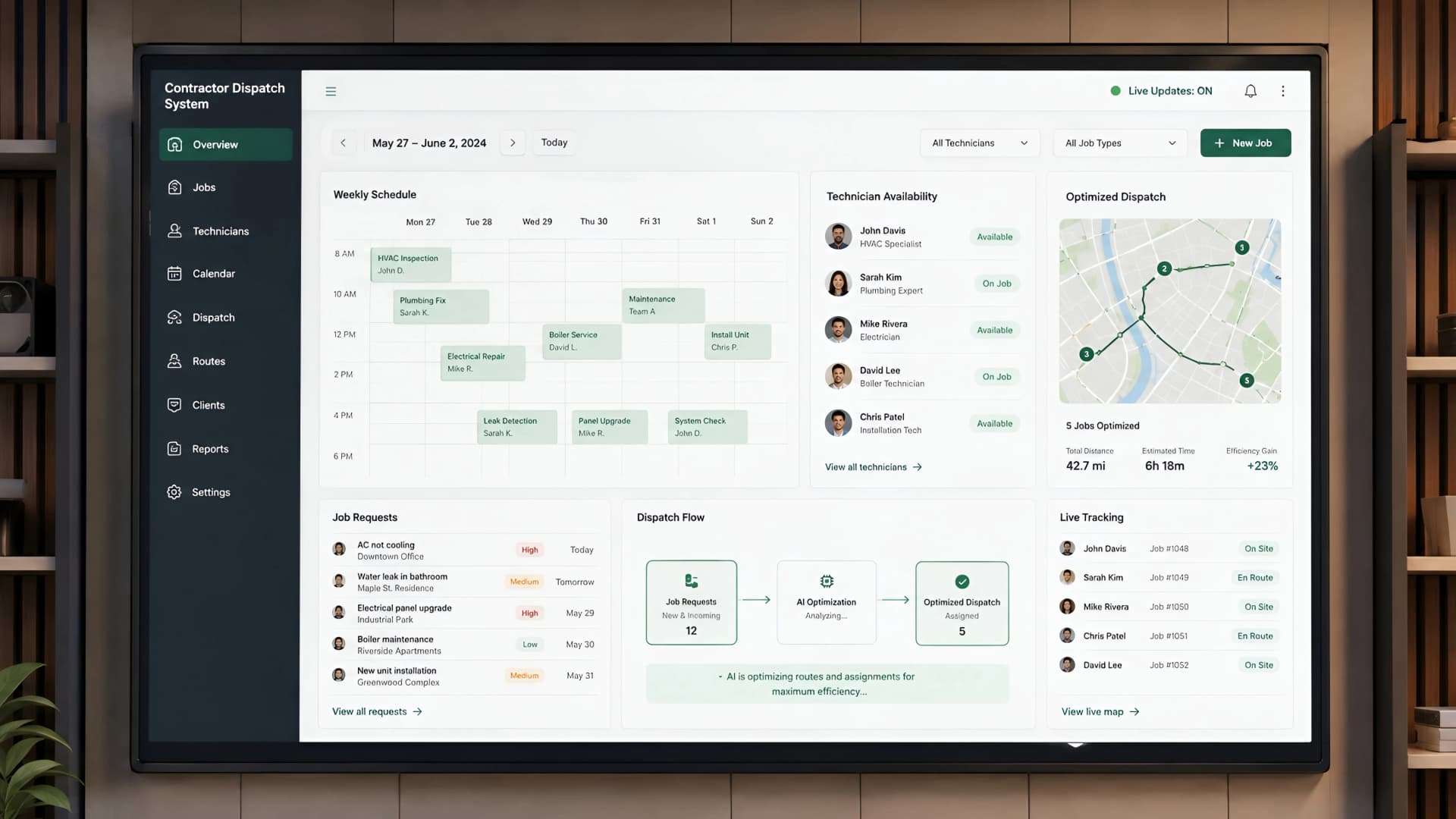
A custom system integrates several critical components. It needs a client-facing booking interface, a powerful backend for scheduling logic, and an intuitive dispatch dashboard for your team. This integrated approach minimizes manual touchpoints and maximizes efficiency.
Key Architectural Components of an Automated System
Building such a system requires careful architectural planning. We typically design for a multi-faceted application, ensuring each part communicates seamlessly.
- Client Booking Portal: This allows customers to view real-time availability and book appointments themselves. It reduces phone calls and empowers clients, often using a modern front-end framework for a smooth user experience.
- Intelligent Scheduling Engine: This is the brain of the operation. It uses algorithms to match jobs with available technicians based on location, skill, and time. We design these algorithms to be configurable, allowing for business-specific rules.
- Real-time Dispatch Dashboard: For office staff, this dashboard provides an overview of all scheduled jobs, technician locations, and job statuses. It allows for dynamic adjustments and immediate communication with field staff.
- Technician Mobile App: Field technicians receive their schedules, job details, and navigation instructions directly on their devices. They can update job status, upload photos, and even collect payments, all integrated back into the main system.
- Automated Notifications: Both clients and technicians receive automated reminders and updates via SMS or email. This significantly reduces no-shows and ensures everyone is informed.
The Muhyo Tech Approach: Prioritizing Robustness and User Experience
When we develop custom web applications for contractors, our focus extends beyond just functionality. We prioritize system reliability and an intuitive user experience. A powerful backend needs an equally strong front-end to be truly effective.
We consider factors like data security for client information, robust API integrations for mapping services, and scalable database architecture to handle growth. Our engineering standards ensure the system remains fast, secure, and maintainable for years, reducing future maintenance risks.
Business Value: Beyond Just Booking Appointments
The value of an automated scheduling and dispatch system extends far beyond simply booking appointments. It’s about transforming your entire operation.
- Optimized Routes & Reduced Fuel Costs: Algorithms find the most efficient paths, saving time and money.
- Fewer No-Shows & Cancellations: Automated reminders keep clients engaged and prepared.
- Improved Technician Utilization: Less idle time, more billable hours.
- Enhanced Customer Satisfaction: Clients appreciate easy booking and reliable service.
- Data-Driven Decisions: Analytics on job types, technician performance, and peak hours help you make smarter business choices.
- Scalability: The system can grow with your business without requiring a complete operational overhaul.
Investing in a custom full-stack web application development for scheduling isn't just a cost; it's an investment in the long-term efficiency and competitive edge of your contracting business. It frees your team from administrative burdens, allowing them to focus on what they do best: delivering quality service.
Considering Off-the-Shelf vs. Custom Solutions
Many contractors first look at existing software options. While these can be a good starting point, they often come with limitations. They might offer 80% of what you need, but that remaining 20% can be critical to your unique workflow. This often means adapting your business processes to the software, rather than the other way around.
A custom solution, while requiring an initial investment, is built precisely for your needs. It evolves with your business, providing a strategic advantage that generic tools cannot. This is where admin dashboard development tailored to your operations really shines, giving you total control.
The Path Forward: From Pain to Precision
The shift from manual, error-prone scheduling to an automated, intelligent system is a significant leap for any contracting business. It requires a clear understanding of your current pain points and a vision for streamlined operations.
At Muhyo Tech, we believe in engineering solutions that directly address these challenges, creating systems that aren't just functional but truly transformative. The goal is always to build a digital backbone that supports growth, reduces stress, and ultimately delivers a better experience for both your team and your clients.