


Wholesale businesses often find themselves trapped in a cycle of manual order processing. Phone calls, emails, spreadsheets, and faxes still dominate many operations, creating bottlenecks and frustration for both sellers and buyers.
This reliance on outdated methods doesn't just slow things down; it actively hinders growth and erodes buyer satisfaction in an increasingly digital world.
The Pain of Manual Wholesale Operations
Imagine the daily grind: sales reps fielding calls, manually entering orders into an ERP, then chasing down inventory confirmations. Pricing adjustments, customer-specific discounts, and minimum order quantities often lead to errors that require time-consuming corrections.
This friction isn't just an internal problem. It directly impacts the buyer experience, making it harder for them to quickly reorder, check stock, or discover new products.
The cumulative effect is lost sales opportunities and a significant drain on operational efficiency.
What is a B2B Wholesale Order Portal?
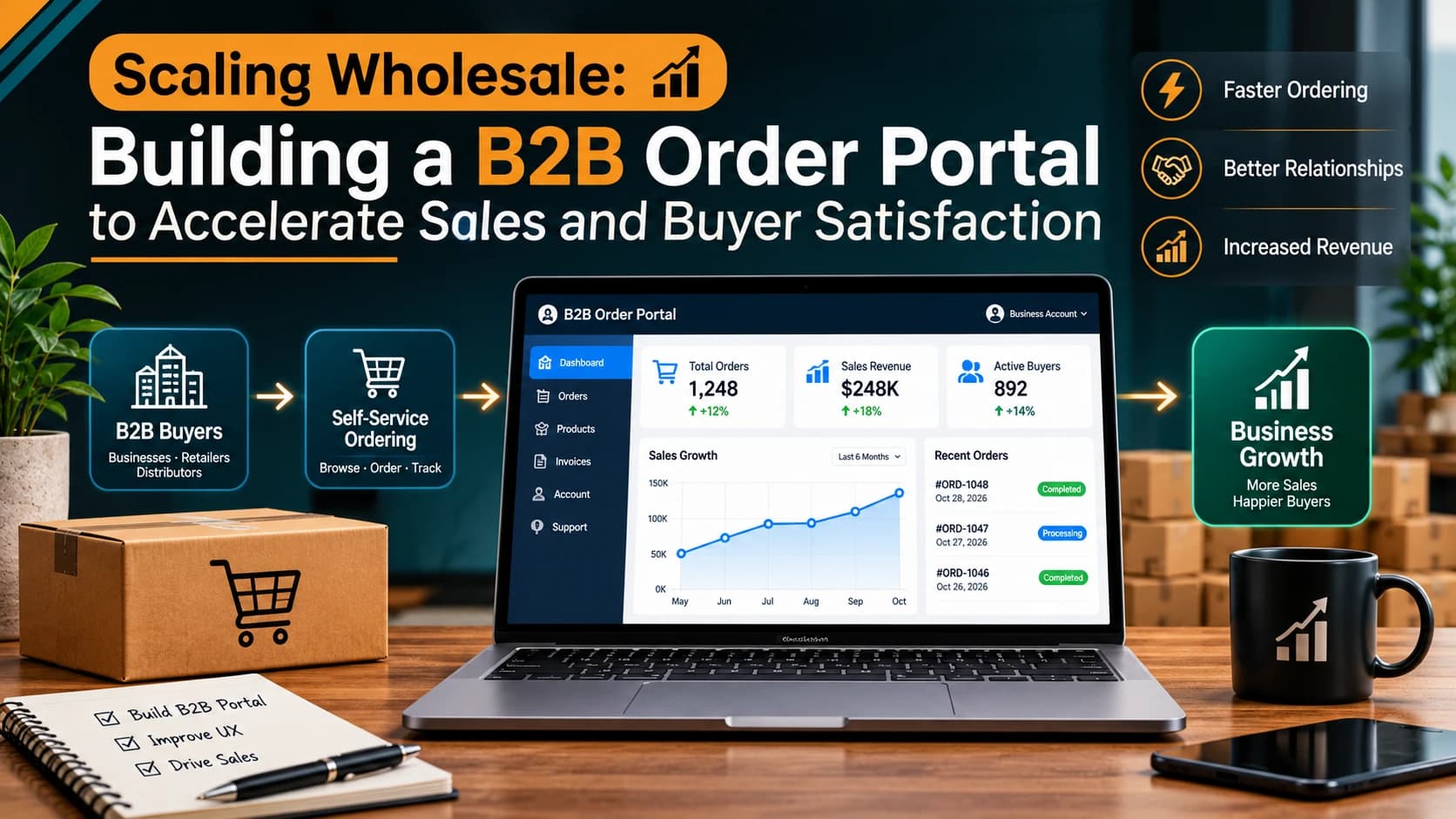
A B2B wholesale order portal is a dedicated web application designed to streamline the entire ordering process for business-to-business transactions. It serves as a self-service hub where buyers can browse products, view custom pricing, place orders, and track their history.
Unlike standard B2C e-commerce sites, these portals are built with the unique complexities of wholesale in mind. This includes features like volume-based pricing, credit terms, and integration with existing backend systems.
Key Features That Drive Value
Building an effective B2B wholesale order portal means addressing specific pain points with targeted features. It's about empowering buyers while simplifying operations.
Buyer-Centric Features:
- Personalized Product Catalogs and Pricing: Each buyer sees only the products and pricing relevant to their account, including negotiated discounts or tiered pricing. This eliminates confusion and manual price lookups.
- Quick Reordering and Order History: Buyers can easily reorder past purchases or access their complete order history, simplifying repeat business. This is crucial for consistent inventory management on their end.
- Real-time Inventory Visibility: Transparency on stock levels helps buyers make informed decisions, preventing backorders and improving trust. Accurate data reduces customer service inquiries.
- Multiple Payment Options and Credit Terms: Supporting various payment methods, including net terms, is essential for B2B transactions. This flexibility caters to diverse buyer needs.
- Self-Service Account Management: Buyers can update their details, manage shipping addresses, and access invoices without needing to contact sales. This frees up internal resources.
Operational Efficiency Features:
- ERP/CRM Integration: Seamless API integration with existing Enterprise Resource Planning (ERP) and Customer Relationship Management (CRM) systems is non-negotiable. This ensures data consistency across inventory, pricing, and customer records.
- Automated Order Processing: Once an order is placed, it flows directly into the fulfillment workflow without manual intervention. This dramatically reduces errors and processing time.
- Dynamic Pricing Rules Engine: Implement complex pricing logic, including volume discounts, customer-group specific pricing, and promotional offers. The system manages these rules automatically.
- Sales Representative Portal: Empower sales teams with a dedicated view to manage their accounts, place orders on behalf of clients, and track performance. This complements buyer self-service.
- Reporting and Analytics: Gain insights into sales trends, popular products, and buyer behavior. These analytics inform business strategy and inventory planning.
The Muhyo Tech Approach: Engineering for Wholesale Success
At Muhyo Tech, we approach B2B wholesale portal development with a focus on robust architecture and long-term scalability. We understand that these aren't just websites; they are critical business infrastructure.
Our process begins with a deep dive into your existing workflows, understanding the nuances of your product catalog, pricing structures, and fulfillment processes. This diagnosis helps us tailor a solution that truly solves your specific operational pains.
We prioritize modular design and clean code, ensuring the portal is easy to maintain and adapt as your business evolves. Custom web development allows us to avoid the limitations of off-the-shelf solutions.
Building a B2B portal isn't just about features; it's about engineering a system that integrates seamlessly into your business, reducing manual work and empowering your buyers. We design for reliability and performance from the ground up.
Architectural Considerations for a Robust Portal
The foundation of a successful B2B portal lies in its architecture. We consider several key elements to ensure performance, security, and scalability.
- Scalable Backend: Choosing a robust backend framework capable of handling growing user traffic and complex data interactions is crucial. This ensures the portal remains performant under increasing load.
- Secure Authentication and Authorization: Implementing role-based access control and strong authentication mechanisms protects sensitive pricing and customer data. Only authorized users should access specific information.
- API-First Design: An API-first approach makes integration with ERP, CRM, inventory, and shipping systems much smoother. This also future-proofs the platform for potential mobile apps or other digital touchpoints.
- Database Optimization: Efficient database design and querying are essential for fast loading times, especially with large product catalogs and extensive order histories. We consider indexing and caching strategies.
- Cloud Infrastructure: Deploying on a scalable cloud platform offers flexibility, reliability, and cost-effectiveness. This allows for easy scaling of resources up or down as demand fluctuates.
Build vs. Buy: Weighing Your Options
When considering a B2B wholesale order portal, businesses often face a critical decision: should we build a custom solution or buy an off-the-shelf platform?
Custom-Built Portal (Our Preference)
| Pros | Cons |
|---|---|
| Tailored to exact business logic & workflows | Higher initial investment |
| Full ownership & control over features | Longer development time |
| Seamless integration with legacy systems | Requires internal or external engineering expertise |
| Scalable to unique future needs | |
| Competitive advantage through unique UX |
Off-the-Shelf Platforms (e.g., Shopify Plus B2B, Magento B2B)
| Pros | Cons |
|---|---|
| Faster deployment | Limited customization options |
| Lower initial cost | May require extensive workarounds for unique workflows |
| Built-in features (may not all be relevant) | Subscription fees can add up |
| Community support | Integration can still be complex |
| Vendor lock-in |
While off-the-shelf solutions offer a quicker launch, their inherent limitations often lead to compromises. We've seen businesses spend significant resources trying to force a generic platform to fit their specific needs, ultimately leading to frustration and inefficient workflows. Our experience with e-commerce website development has shown that custom solutions deliver superior long-term value for complex B2B scenarios.
Common Pitfalls and How to Avoid Them
Even with the best intentions, building a B2B portal can stumble. Understanding common mistakes helps ensure a smoother journey.
- Underestimating Integration Complexity: Integrating with existing ERPs or accounting software is rarely a 'plug-and-play' operation. Detailed planning and robust API integration strategies are essential.
- Ignoring User Experience (UX): B2B buyers expect the same intuitive experience they get from B2C sites. A clunky, hard-to-navigate portal will lead to low adoption rates.
- Lack of Scalability Planning: What works for 50 buyers might break at 5,000. Design for growth from day one, considering database performance, server capacity, and code structure.
- Poor Data Synchronization: Inconsistent product data, pricing, or inventory between the portal and backend systems creates chaos. Real-time or near real-time synchronization is critical.
- Skipping Security Measures: B2B portals handle sensitive commercial data. Neglecting security protocols, encryption, and regular audits puts your business and your buyers at risk.
The Business Value: Beyond Just Placing Orders
The true value of a B2B wholesale order portal extends far beyond simply digitizing order entry. It's a strategic investment that impacts multiple facets of your business.
- Increased Order Volume: By making it easier and faster for buyers to order, you naturally encourage more frequent and larger purchases. Self-service accessibility removes barriers to buying.
- Reduced Operational Costs: Automating order processing frees up sales and administrative staff to focus on higher-value activities. Fewer manual errors mean less time spent on corrections.
- Enhanced Buyer Satisfaction and Retention: A modern, efficient buying experience builds loyalty. Buyers appreciate convenience, transparency, and control over their orders.
- Improved Data Accuracy: Direct order entry by buyers reduces human error, ensuring that what they order is precisely what gets fulfilled. This leads to fewer returns and disputes.
- Deeper Business Insights: The data collected through the portal provides invaluable insights into buyer behavior, product popularity, and sales trends. This empowers better decision-making.
- Faster Time-to-Market for New Products: Easily update your digital catalog with new products and promotions, making them instantly available to all buyers.
Frequently Asked Questions
What features should a B2B wholesale order portal have?
Essential features include personalized pricing, real-time inventory, quick reordering, self-service account management, and robust integration with your ERP/CRM systems. Customer-specific catalogs and payment terms are also critical.
How do I choose the best B2B wholesale order portal for my business?
Start by identifying your unique business processes, pricing complexities, and integration needs. Evaluate whether a custom-built solution offers the flexibility and control required, or if an off-the-shelf platform can meet most of your requirements without extensive workarounds. Consider scalability and long-term maintenance.
Can I integrate a B2B wholesale portal with my existing ERP or CRM?
Yes, integration with existing ERP (e.g., SAP, Oracle, NetSuite) or CRM (e.g., Salesforce) systems is crucial and highly recommended. It ensures data consistency for inventory, pricing, customer data, and order fulfillment. This typically involves custom API development and integration.
Final Thoughts on Modernizing Wholesale
The shift from manual processes to an automated B2B wholesale order portal isn't just a technological upgrade; it's a strategic imperative. It's about empowering your buyers, streamlining your operations, and positioning your business for sustainable growth.
While the journey requires careful planning and expert engineering, the long-term benefits in efficiency, sales acceleration, and buyer satisfaction are substantial. Investing in a robust, custom-tailored solution ensures your digital presence truly serves your unique business needs.