


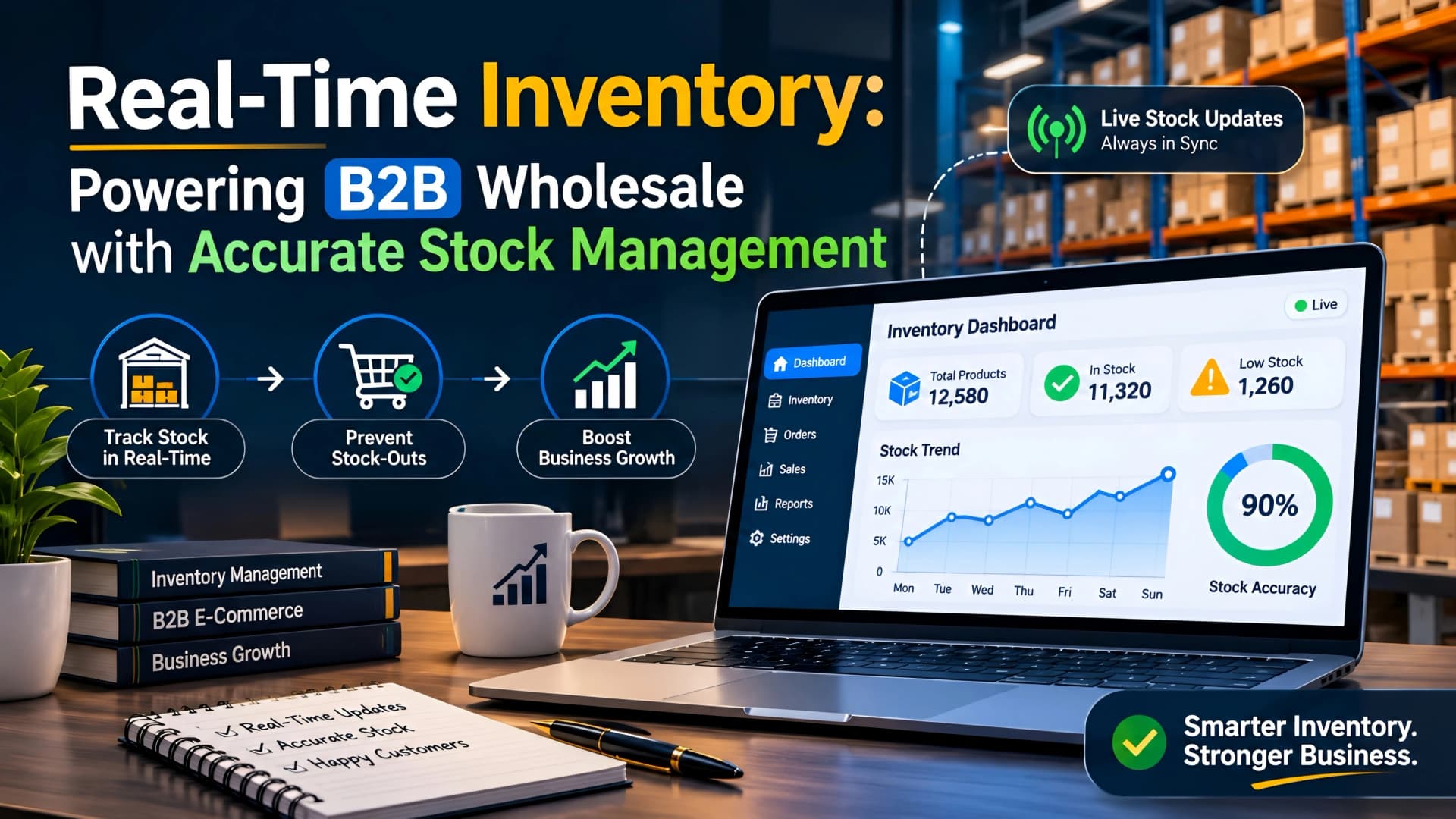
One of the most persistent frustrations for B2B wholesale businesses is the constant battle against outdated inventory data. An order portal might show stock, a customer places a significant order, only for the backend to reveal the items are long gone.
This disconnect leads to frustrated buyers, manual adjustments, backorders, and a significant hit to supplier reliability. It's a common pain point that highlights the critical need for a robust b2b real-time inventory system.
The Pain of Stale Inventory Data in Wholesale
Imagine a scenario: a valued B2B client logs into your shiny new wholesale portal, expecting a smooth, self-service experience. They browse, select items, and confirm an order for a dozen pallets of a specific product.
Behind the scenes, your ERP system, the true source of inventory, hasn't communicated its latest stock levels to the portal. What was available an hour ago is now half-gone due to a bulk order processed offline or through another channel.
Diagnosing the Disconnect: Why Real-Time Matters
The core problem isn't usually a lack of data, but a lack of API integration that ensures data flows instantly and reliably. Many wholesale businesses rely on periodic batch updates, running once an hour or even overnight.
While this might suffice for some data, inventory is a live, dynamic asset. Every sale, every return, every shipment received, changes its state. Your B2B portal needs to reflect this reality immediately.
Engineering the Solution: ERP to Portal API Integration
At Muhyo Tech, when we design B2B solutions like the ones discussed in our foundational guide on Scaling Wholesale: Building a B2B Order Portal, real-time inventory is non-negotiable. The engineering response starts with tightly integrating the ERP system – whether it's SAP, Oracle, NetSuite, or a custom solution – with the B2B portal.
This typically involves building a dedicated API layer. This layer acts as a translator and coordinator, pulling inventory updates from the ERP and pushing them to the portal, ensuring the data presented to the customer is always current.
Architectural Considerations for Real-Time Synchronization
Achieving true real-time inventory requires careful architectural choices. We often consider two primary integration patterns: event-driven updates and synchronous API calls.
Event-driven updates, using webhooks or message queues, are ideal for pushing changes from the ERP as they happen. For example, when an item's stock count changes in the ERP, an event is fired, triggering an immediate update to the portal's inventory database.
Synchronous API calls, on the other hand, are crucial for actions like order placement. Before a B2B order is confirmed, the portal makes a direct, real-time query to the ERP to verify stock availability. This prevents overselling in the critical moments of a transaction.
Handling Scale and Performance
A common pitfall when scaling B2B e-commerce solutions is underestimating the load on the inventory system. High traffic to the portal, especially during peak ordering times, can overwhelm a poorly optimized ERP connection.
Our approach involves intelligent caching strategies, but with a strict understanding of cache invalidation for inventory. We also implement rate limiting and circuit breakers to protect the ERP from being flooded with requests, ensuring system stability.
Tradeoffs and Maintenance: The Reality of Production
Implementing a b2b real-time inventory system isn't without its tradeoffs. The primary challenge lies in the complexity of maintaining the integration itself. ERP systems can be finicky, and any changes to their schema or API endpoints require corresponding updates in the portal's integration layer.
Robust error handling and monitoring are paramount. If an API call fails, the system must gracefully handle the error, log it, and potentially retry. Proactive monitoring alerts us to any discrepancies or integration failures before they impact customers.
Ensuring Data Consistency and Reliability
Beyond just performance, data consistency is critical. We implement idempotent operations where possible, meaning that if an update is sent twice, it doesn't cause incorrect data. Transactional integrity is also key; an order should only decrement stock if it's fully confirmed and recorded.
For high-volume scenarios, we might introduce an intermediate database integration or a dedicated inventory service that acts as a buffer. This service aggregates updates and provides a fast, consistent view of stock to the portal, reducing direct load on the ERP.
The Business Outcome: Reliability and Reduced Stress
The business value of a well-engineered b2b real-time inventory system is profound. Eliminating stock discrepancies means fewer backorders and less manual reconciliation, saving significant operational costs.
Buyers gain confidence in your portal, trusting that what they see is truly available. This translates to improved order fulfillment rates, higher customer satisfaction, and a stronger reputation for reliability. For wholesale business owners, it means less stress, fewer customer complaints, and a more efficient, scalable sales process.
Building such robust integrations is a core part of how Muhyo Tech helps businesses modernize their operations and drive growth through reliable digital platforms.