


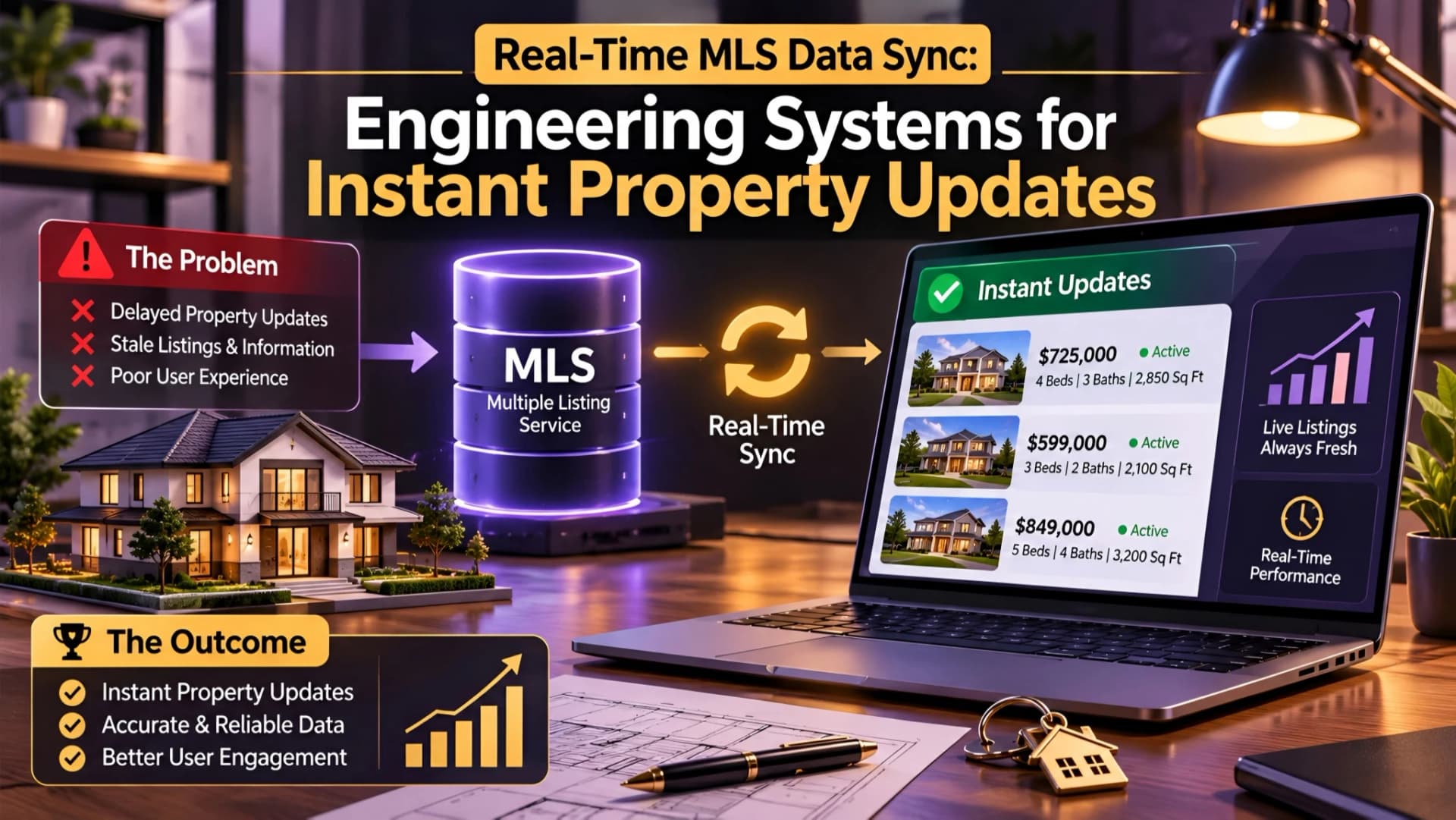
Outdated property listings are a silent killer for real estate businesses. A potential buyer finds their dream home online, only to learn it sold days ago. This isn't just frustrating for them; it erodes trust in the agent and the portal itself.
The root cause often lies in slow or unreliable MLS (Multiple Listing Service) data synchronization. Building a dynamic, lead-generating property portal, as we discussed in Winning Leads in Real Estate: Building a Dynamic MLS-Integrated Property Portal, hinges on fresh data.
The Core Challenge: Bridging Data Sources
Integrating MLS data means connecting your platform to a complex, distributed network. MLS organizations typically use standards like IDX (Internet Data Exchange), RETS (Real Estate Transaction Standard), or the newer RESO Web API.
Each standard has its own quirks, data formats, and access protocols. The challenge isn't just getting the data, but transforming and storing it in a way that's fast, searchable, and always current for your users.
Understanding MLS Data Access: IDX, RETS, and RESO Web API
Before diving into sync strategies, it's crucial to understand the primary ways to access MLS data. Each comes with its own technical implications and suitability for real-time updates.
IDX is often the simplest, offering pre-formatted feeds or iframe solutions, but with limited customization and often delayed updates. RETS, while older, provides more granular control over data fields and query capabilities, making it suitable for custom portals but requiring more engineering effort.
RESO Web API represents the modern standard, built on RESTful principles and offering structured data via JSON. This is often our preferred choice at Muhyo Tech, as it aligns with modern web development practices and simplifies data parsing and integration.
Engineering for Near Real-Time Synchronization
Achieving truly 'real-time' updates in a distributed system is incredibly complex and often unnecessary. 'Near real-time' is the practical and achievable goal, minimizing the delay between an MLS update and its appearance on your portal.
Our approach at Muhyo Tech involves a combination of strategies, tailored to the specific MLS provider's capabilities and the client's business needs.
1. Webhooks: The Ideal Scenario
When available, webhooks are the gold standard for real-time updates. Instead of constantly asking the MLS for new data, the MLS server notifies your application directly whenever a relevant change occurs (new listing, price change, status update).
This 'push' mechanism significantly reduces latency and server load. Your system simply listens for these notifications and processes them instantly, ensuring your listings are always current.
2. Smart Polling Strategies
If webhooks aren't an option, polling becomes necessary. This means your application periodically requests data from the MLS. The key is 'smart' polling, which minimizes unnecessary requests and optimizes data transfer.
Instead of fetching all listings every time, we implement strategies to request only new or changed listings since the last successful sync. This might involve timestamp-based queries or specific 'delta' feeds if the MLS API supports them.
Balancing polling frequency is critical. Too frequent, and you hit API limits or incur unnecessary costs. Too infrequent, and your data becomes stale. We fine-tune this based on MLS provider rules and market velocity.
3. Robust Data Processing Pipelines
Receiving raw MLS data is just the first step. A robust data processing pipeline is essential. This involves validation, standardization, and storage of the data in your own database, optimized for your portal's search and display needs.
We build resilient systems that can handle large data volumes, inconsistent formats, and transient API errors. This includes error logging, retry mechanisms, and data transformation services that ensure data integrity and consistency.
Architectural Considerations for Scalability and Reliability
A real estate portal deals with ever-changing data and potentially high user traffic. The underlying architecture must be designed for both.
- Database Design: Optimized schemas for property listings, efficient indexing for search, and consideration for geographical queries are paramount.
- Caching Mechanisms: Implementing caching layers for frequently accessed data reduces database load and speeds up page delivery.
- Queueing Systems: For handling webhook notifications or large polling results, message queues (like RabbitMQ or AWS SQS) ensure that data processing happens asynchronously without blocking user requests.
- Monitoring and Alerting: Constant monitoring of data sync processes, API health, and database performance is non-negotiable. Automated alerts notify us immediately of any issues.
At Muhyo Tech, our API integration services prioritize building these resilient and scalable foundations. We understand that an unreliable data feed translates directly to lost business opportunities.
The Business Impact: Why Real-Time Matters
Investing in robust real-time MLS data synchronization isn't just a technical detail; it's a strategic business advantage. It ensures your users see accurate, up-to-the-minute listings, building trust and reducing frustration.
For agents, it means they aren't fielding calls about sold properties. For brokers, it translates into a highly credible platform that attracts and retains more users, ultimately generating more leads and conversions. In a fast-moving market, being first with accurate information is a competitive differentiator.
Navigating Costs and Challenges
Integrating MLS data isn't without its costs and challenges. Beyond the engineering effort, there are often fees associated with MLS data access, which vary significantly by board. Data licensing agreements can be complex, and compliance with IDX/RETS/RESO rules is mandatory.
The primary challenge remains the variability across MLS boards. Each might have slightly different API endpoints, data fields, and access policies. A flexible, adaptable integration strategy is key to managing this complexity effectively.
Our experience in full-stack web app development has taught us that anticipating these variances and building modular, configurable integration layers is essential for long-term success and maintainability.
Conclusion: Your Portal, Powered by Precision
Accurate, timely property data is the lifeblood of any successful real estate portal. By carefully designing and implementing robust MLS data synchronization systems, you move beyond generic, stale listings to offer a truly dynamic, trustworthy platform.
This engineering commitment ensures your portal remains a powerful lead generation tool, empowering agents and delighting buyers with the most current information available.