


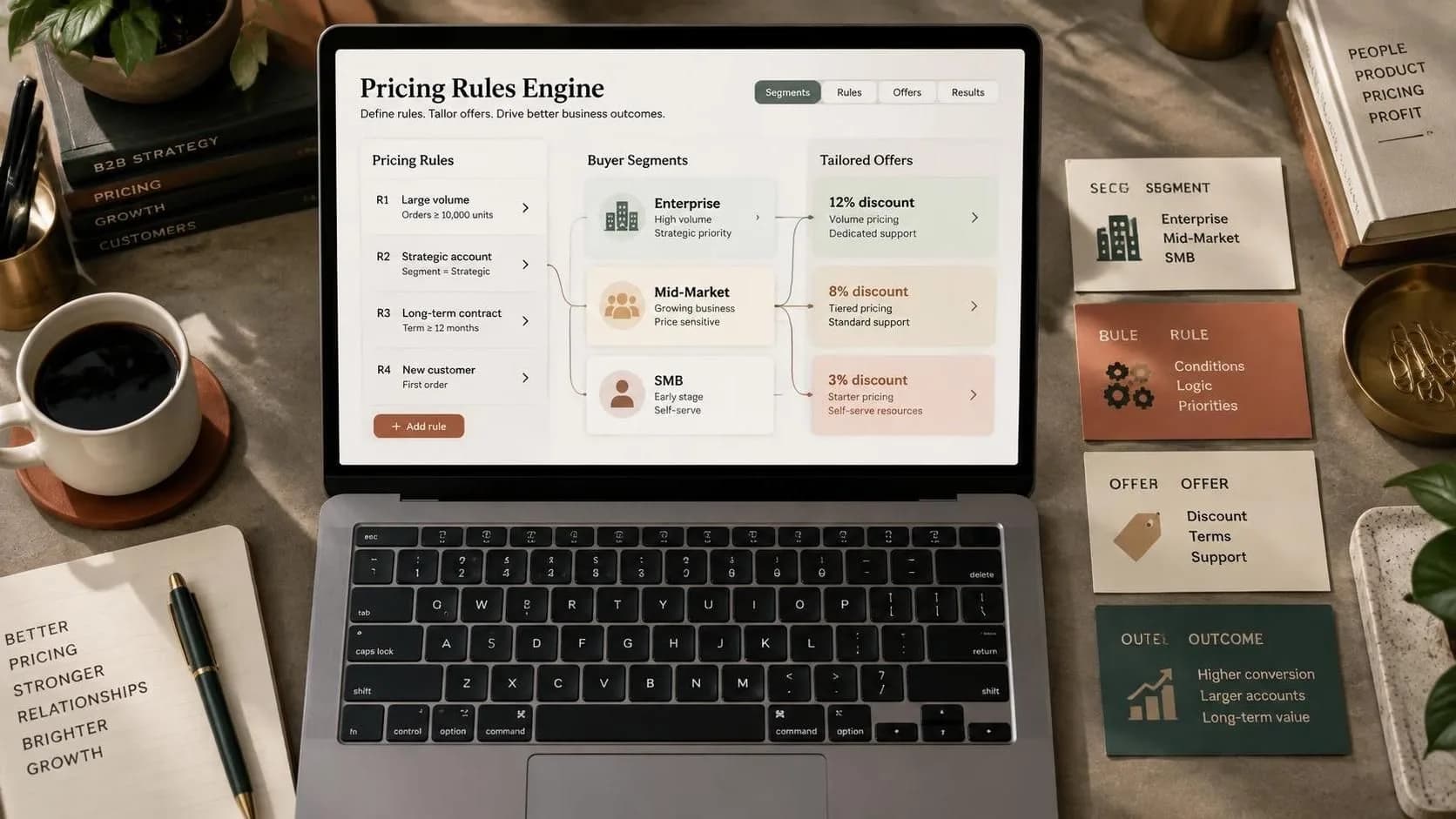
Manually adjusting prices for different B2B buyer tiers is a significant headache for many wholesale businesses. This process is not only incredibly time-consuming but also highly susceptible to human error, leading to lost revenue or frustrated clients.
Imagine juggling spreadsheets for volume discounts, special contract rates, and loyalty pricing across hundreds of customers. The complexity quickly becomes unmanageable, directly impacting operational efficiency and customer satisfaction.
The Pain of Manual Pricing Adjustments
For B2B wholesale operations, pricing isn't a one-size-fits-all scenario. Customers often qualify for different rates based on purchase history, order volume, specific contractual agreements, or even their geographic location.
Attempting to manage these variables manually means sales teams spend valuable hours on administrative tasks instead of building relationships. It also introduces the risk of quoting incorrect prices, which can damage trust and lead to costly rectifications.
At Muhyo Tech, we often see businesses struggling with these very challenges. The drive to scale often collides with the limitations of manual processes, especially in a critical area like pricing.
Engineering a Solution: Custom Dynamic Pricing Engines
The engineering response to this pain point is the development of a custom dynamic pricing engine integrated directly into a B2B sales portal. This engine automates the application of complex pricing rules, ensuring accuracy and consistency.
Such an engine acts as the brain behind the pricing logic, evaluating various factors in real-time to present the correct price to each authenticated buyer. This transforms a laborious manual process into an efficient, automated workflow.
Key Features of a Robust B2B Dynamic Pricing Portal
A well-designed B2B dynamic pricing portal needs several core features to be truly effective. These elements work together to provide a seamless and accurate pricing experience.
First, it requires a robust rule management interface for administrators. This allows business owners or sales managers to define and update pricing conditions without needing developer intervention.
Second, real-time calculation capabilities are essential. When a buyer adds items to their cart, the system must instantly apply all relevant rules and display the final price, including any applicable discounts or surcharges.
Finally, deep integration with inventory and customer relationship management (CRM) systems is crucial. This ensures pricing rules are always based on the most current data regarding stock levels, customer segments, and order history.
How We Approach Dynamic Pricing Implementation
Our approach to building a custom B2B portal often starts with understanding the full spectrum of pricing rules a business employs. This includes volume tiers, customer-specific contracts, promotional discounts, and payment term incentives.
We then design a flexible schema for storing these rules, ensuring they can be easily updated and prioritized. This often involves a 'rules engine' architecture, where conditions and actions are defined separately, allowing for high configurability.
For example, a rule might state: 'IF customer_segment = 'Premium' AND order_volume > 100 units THEN apply 15% discount'. The system evaluates these conditions against the current user and their cart contents.
Architectural Considerations and Trade-offs
Building a dynamic pricing engine involves several architectural decisions. One major consideration is whether to implement a server-side or client-side calculation strategy, or a hybrid approach.
Server-side calculation offers higher security and ensures consistency, as all logic resides on your controlled infrastructure. However, it can introduce latency if not optimized, especially for complex rule sets.
Client-side calculation can provide faster feedback to the user but risks exposing pricing logic or being tampered with. A common compromise is to perform initial estimates on the client and finalize calculations on the server before checkout.
Another trade-off involves the complexity of the rules engine itself. A highly flexible, configurable engine offers immense power but requires more initial development effort and careful testing to prevent unintended pricing errors.
The Business Value: Automation, Accuracy, and Personalization
Implementing a custom web application with dynamic pricing rules delivers significant business value. The most immediate benefit is the automation of complex pricing structures, freeing up valuable sales and administrative time.
This automation drastically reduces pricing errors, leading to greater financial accuracy and fewer disputes with buyers. It builds confidence and reliability into every transaction.
Beyond efficiency, dynamic pricing enables personalized buyer experiences at scale. Customers see the prices relevant to them, fostering a sense of value and encouraging repeat business.
This kind of sophisticated functionality is a cornerstone of a modern B2B order portal, as discussed in our foundational guide: Scaling Wholesale: Building a B2B Order Portal to Accelerate Sales and Buyer Satisfaction. It allows businesses to move beyond manual processing and truly accelerate sales.
Ensuring Scalability and Maintainability
When designing these systems, we always prioritize scalability and maintainability. A dynamic pricing engine must be able to handle increasing numbers of rules, products, and simultaneous users without performance degradation.
This means using efficient database queries, caching strategies, and well-structured code that can be easily updated or extended. Our focus on clean architecture ensures that future adjustments to pricing strategies are straightforward, not a re-engineering nightmare.
For any wholesale business owner looking to automate their sales processes and offer a superior buyer experience, a custom dynamic pricing portal is a strategic investment. It transforms a potential bottleneck into a powerful competitive advantage.