


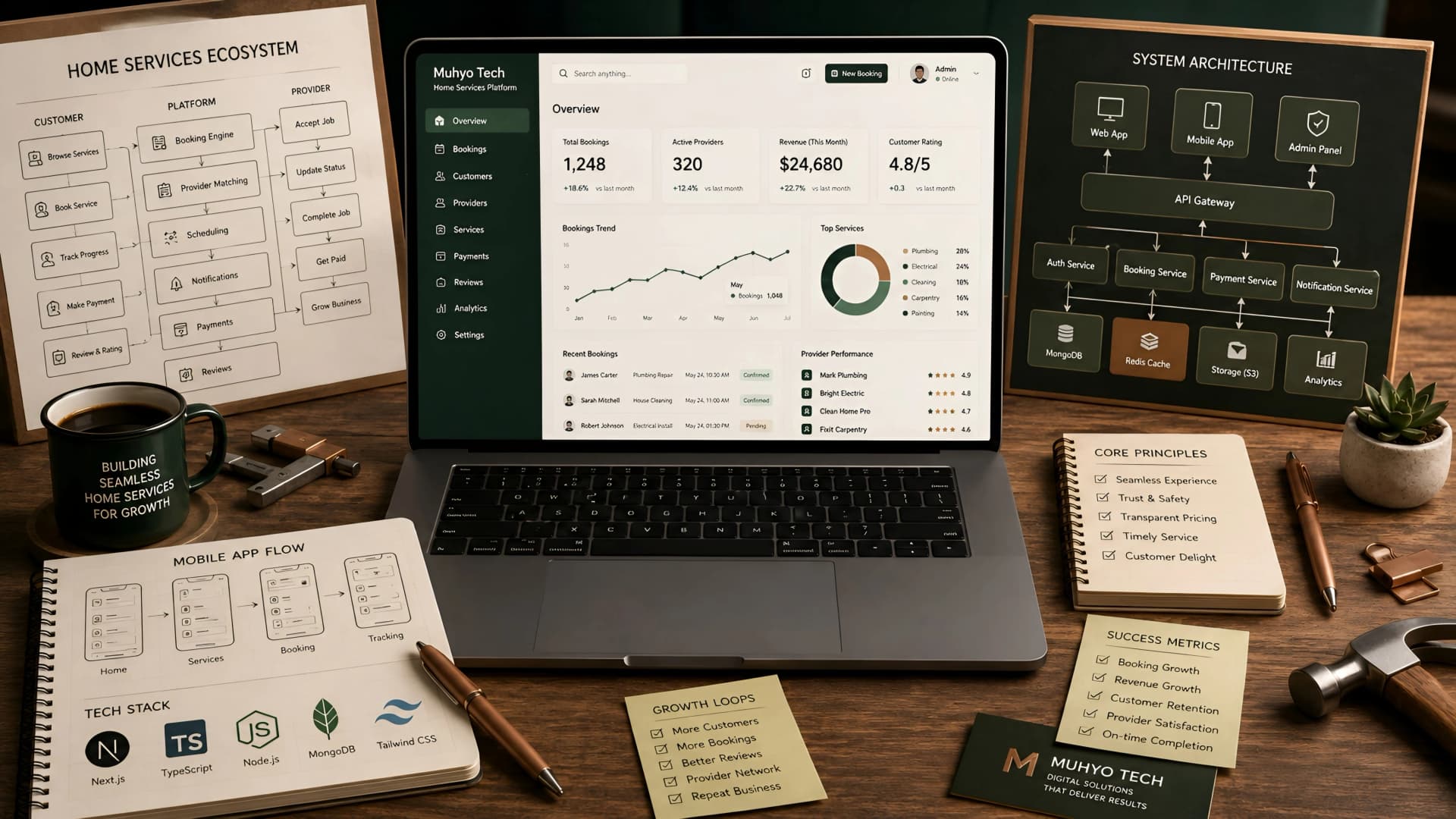
Running a home services business often feels like juggling. You’re managing leads, scheduling appointments, dispatching teams, handling quotes, and chasing payments. All these tasks, if handled manually or with disconnected software, create a chaotic bottleneck.
This fragmentation isn't just an inconvenience; it's a significant drain on resources, directly impacting profitability and limiting growth. It’s a common pain point we see before a proper digital transformation takes hold.
The Core Problem: Fragmented Operations & Lost Opportunities
Many contractors start with a patchwork of tools: spreadsheets for clients, a whiteboard for scheduling, a generic accounting package, and email for communication. This approach is manageable for a sole proprietor but quickly breaks down under the weight of growth.
Leads get lost, schedules conflict, and customer service suffers. The administrative burden grows disproportionately with every new client or team member, stifling the very growth the business owner works so hard to achieve.
At Muhyo Tech, we often see businesses trapped in this cycle. The immediate solution isn't just buying more software; it's about strategically integrating systems to create a cohesive operational flow.
What is Digital Transformation for Home Services?
Digital transformation in home services means moving beyond isolated tools to a unified, interconnected digital ecosystem. It’s about leveraging technology to automate processes, centralize data, and provide a seamless experience for both your team and your customers.
This isn't a one-time fix but an ongoing evolution. It shifts a business from reactive problem-solving to proactive, data-driven decision-making.
Why It Matters: Beyond Just Efficiency
The value extends far beyond simply saving time. A well-executed digital transformation enhances customer satisfaction through faster responses and clearer communication.
It also empowers your team with better tools, reducing frustration and improving job performance. Ultimately, it builds a more resilient and scalable business foundation.
The Pillars of a Modern Digital Contractor Ecosystem
A truly transformed home services business relies on several interconnected digital pillars. These aren't just standalone tools, but components designed to work together, ideally within a custom web application framework.
We focus on building these systems with full-stack web app development principles, ensuring robust backend logic and intuitive frontend interfaces.
1. Integrated CRM and Lead Management
Your customer relationship management (CRM) system is the heart of your client interactions. It should track every lead from initial contact through service delivery and beyond.
A custom CRM can be tailored to the unique sales pipeline of home services, managing inquiries, quotes, follow-ups, and client history in one place. This prevents leads from falling through the cracks and ensures consistent communication.
2. Dynamic Scheduling and Dispatching
Manual scheduling is a nightmare of phone calls and last-minute changes. A digital scheduling system allows for optimized routing, real-time technician availability, and automated client notifications.
This reduces travel time, minimizes no-shows, and ensures your team is always at the right place, at the right time, with the right information.
3. Automated Quoting and Invoicing
Slow or inaccurate quoting can lose jobs. A digital system allows for quick, professional quote generation based on standardized service menus and pricing rules.
Integrated invoicing simplifies billing, tracks payments, and provides clients with clear, professional documentation. This improves cash flow and reduces administrative errors.
4. Client Portals and Communication Hubs
Empowering clients with a secure online portal improves their experience and reduces inbound calls. They can request services, view appointment statuses, access invoices, and communicate directly with your team.
This transparency builds trust and positions your business as modern and customer-centric. It's a key part of our custom website development approach for service businesses.
5. Field Service Management (FSM) Integration
For businesses with mobile teams, FSM capabilities are crucial. This includes mobile apps for technicians to access job details, update statuses, capture photos, and process payments on-site.
Integrating this with your core system provides real-time visibility into field operations, enabling quick adjustments and better resource allocation.
Architectural Choices: Custom vs. Off-the-Shelf
When considering digital transformation, a critical decision arises: should you adapt existing off-the-shelf software or invest in a custom-built solution? Both have valid use cases and trade-offs.
We weigh these factors carefully with every client. The goal is always the most effective, scalable solution, not just the cheapest or fastest.
| Feature | Off-the-Shelf Solutions | Custom Web Application |
|---|---|---|
| Initial Cost | Lower (subscription-based) | Higher (upfront development) |
| Scalability | Limited by platform features | Highly scalable, built to specific needs |
| Flexibility | Rigid, 'one-size-fits-all' | Fully customizable to unique workflows |
| Integration | Pre-built integrations, but often limited | Seamless, deep integration potential |
| Maintenance | Vendor-managed updates | Requires dedicated development/support |
| Ownership | License to use, no IP ownership | Full ownership of code and IP |
| Competitive Edge | Standard features, no differentiation | Unique features, strong competitive advantage |
| Time to Market | Faster (setup and configuration) | Slower (design and development cycle) |
When to Choose Custom Development
Custom development shines when your business has unique workflows, specific compliance requirements, or ambitions for truly differentiating features. It offers unparalleled flexibility and long-term scalability.
While the initial investment is higher, a custom admin dashboard development, for example, can precisely match your operational needs, leading to greater efficiency gains and a stronger competitive position over time.
Our Engineering Approach: Building for Resilience and Growth
At Muhyo Tech, our digital transformation projects for home services begin with a deep dive into existing operations. We identify pain points, map workflows, and define the core needs that a new system must address.
This discovery phase is crucial for designing an architecture that is both powerful and practical.
Phased Implementation and Iterative Development
We advocate for a phased approach, starting with a Minimum Viable Product (MVP) that addresses the most critical pain points. This allows for faster deployment and immediate value realization.
Subsequent phases introduce additional features, guided by user feedback and evolving business needs. This iterative process minimizes risk and ensures the solution remains aligned with business goals.
Focus on User Experience (UX)
A powerful system is useless if no one wants to use it. Our engineering prioritizes intuitive user interfaces for both internal teams and external clients.
Clean dashboards, logical navigation, and clear calls to action reduce training time and increase adoption, ensuring the technology truly serves your business.
Scalability and Maintainability
We build systems with future growth in mind. This means choosing robust technologies, writing clean, well-documented code, and designing modular architectures.
A scalable system can handle increased user loads and new features without requiring a complete rebuild, protecting your initial investment and enabling smooth expansion.
Common Pitfalls in Digital Transformation for Home Services
Even with the best intentions, digital transformation efforts can stumble. Awareness of these common pitfalls can help businesses navigate the process more effectively.
Avoiding these issues is a key part of our project planning and risk mitigation strategies.
1. Lack of Clear Objectives
Starting a transformation without a clear understanding of what problems you're trying to solve or what outcomes you expect can lead to scope creep and wasted resources. Define your 'why' first.
2. Underestimating User Adoption Challenges
Introducing new tools requires training and a shift in habits. Without proper change management and support, even the best system can face resistance from employees.
3. Ignoring Data Migration
Transitioning existing client data, historical quotes, and schedules into a new system is complex. Poor planning here can lead to lost data or significant operational disruption.
4. Over-customization Too Early
While custom solutions offer flexibility, trying to build every conceivable feature in the first iteration can lead to delays and cost overruns. Prioritize core functionality first.
5. Neglecting Security and Compliance
Handling client data requires robust security measures and adherence to relevant privacy regulations. Cutting corners here can have severe consequences.
Architectural Checklist for a Digital Home Services Platform
When planning your digital transformation, consider these architectural components and best practices. This checklist ensures a comprehensive and robust system.
- Centralized Database: A single source of truth for all client, job, and financial data.
- Modular Architecture: Allows for independent development and scaling of features (e.g., separate modules for CRM, scheduling, invoicing).
- API-First Design: Enables seamless integration with third-party tools (e.g., payment gateways, accounting software, mapping services).
- Secure Authentication & Authorization: Role-based access control to protect sensitive data.
- Mobile Responsiveness: Ensures the platform is usable on all devices, especially for field technicians.
- Scalable Cloud Infrastructure: Services like AWS, Azure, or Google Cloud for reliable performance and cost efficiency.
- Robust Backup & Disaster Recovery: Plans to protect against data loss and ensure business continuity.
- Monitoring & Analytics: Tools to track system performance, user activity, and business metrics.
- Automated Testing: Ensures new features and updates don't break existing functionality.
Business Value: The ROI of a Transformed Business
The investment in digital transformation for home services yields significant returns across several key areas. These are the outcomes we aim for with every project.
Increased Operational Efficiency
Automation of routine tasks frees up staff to focus on higher-value activities. Reduced manual errors lead to fewer rework cycles and improved accuracy.
Enhanced Customer Experience
Faster response times, transparent communication, and self-service options build stronger client relationships. Satisfied customers become repeat customers and valuable referrers.
Faster Growth and Scalability
With streamlined operations, your business can handle a higher volume of leads and jobs without a proportional increase in administrative overhead. This unlocks true growth potential.
Improved Decision-Making
Centralized data provides clear insights into business performance, allowing owners to make informed decisions about marketing, staffing, and service offerings.
Reduced Administrative Overhead
Less time spent on paperwork, phone calls, and manual data entry translates directly into cost savings and increased profitability. Your team can focus on what they do best: serving clients.
Frequently Asked Questions (FAQs)
How long does a typical digital transformation take for a home services business?
The timeline varies greatly depending on the scope and complexity. A focused MVP might take 3-6 months, while a comprehensive, fully integrated system could take 9-18 months. We plan in phases to deliver value quickly.
What are the biggest risks involved in digitizing operations?
The main risks include resistance to change from employees, underestimating data migration challenges, and choosing the wrong technology stack that doesn't scale. Proper planning and communication mitigate these risks.
Can I integrate my existing accounting software with a new custom system?
Yes, absolutely. A well-designed custom web application prioritizes API integrations. We can build connectors to popular accounting platforms like QuickBooks or Xero, ensuring financial data flows seamlessly.
How do I ensure my team adopts the new digital tools?
Involve your team early in the planning process, provide thorough training, and offer ongoing support. Highlight how the new tools will make their jobs easier, not harder, and celebrate early successes.
Moving Forward with Confidence
Digital transformation isn't just for tech companies; it's a vital strategy for home services businesses looking to thrive in a competitive market. It’s about building a foundation that supports efficiency, customer satisfaction, and sustainable growth.
By investing in integrated, purpose-built digital solutions, contractors can move past the daily chaos and focus on what truly matters: delivering exceptional service and expanding their business. At Muhyo Tech, we’re committed to helping businesses navigate this journey, building robust systems that stand the test of time.